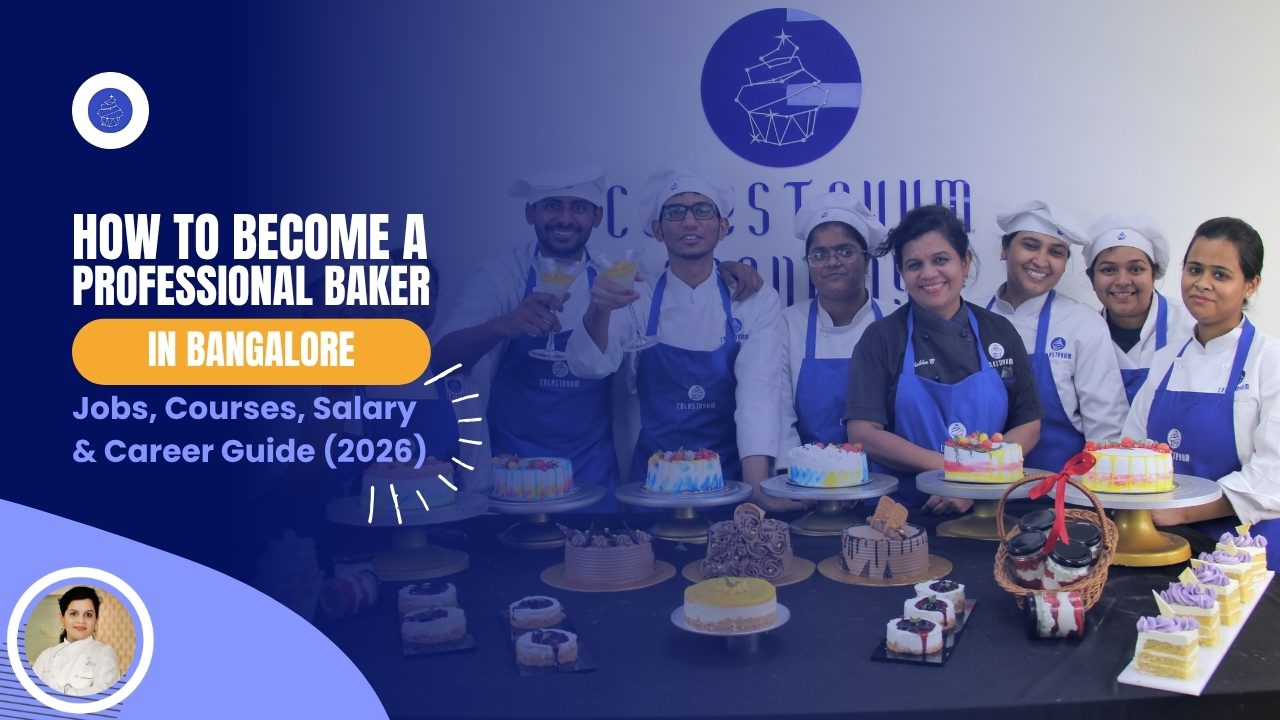
How to Become a Professional Baker in Bangalore
Why Bangalore Is a Good Place to Build a Professional Baking Career
A baking career in Bangalore is not limited to working in a traditional neighbourhood bakery. The city has hotels, cafés, independent bakeries, pastry businesses, cloud kitchens and home-grown food brands, giving aspiring bakers several types of workplaces to explore as they develop their skills.
Depending on your interests, professional baking training can lead you towards several different specialisations.
Artisan Breads
Bread production, dough handling, fermentation, sourdough and specialty loaves.
Pastry & Desserts
Pastries, laminated doughs, creams, desserts and French-style preparations.
Cake Decoration
Cake finishing, buttercream, fondant, piping and decorative techniques.
Chocolate & Confectionery
Chocolate handling, tempering, moulding, fillings and confectionery products.
Bakery Production
Commercial production, repeatable processes, consistency and kitchen organisation.
Bakery Entrepreneurship
Costing, pricing, menu planning and developing a bakery or home-baking business.
This variety is useful when you are still deciding what kind of baker you want to become. Someone interested in breads may follow a very different path from a learner who prefers pastry, chocolate work or cake decoration. A good bakery course in Bangalore should therefore give you enough practical exposure to understand where your strengths and interests lie.
For learners comparing bakery courses in Bangalore, it is more useful to look at the training format, practical hours, subjects covered and career relevance than to choose a programme based only on its name.
What Jobs Can You Get After a Professional Baking Course?
Completing a professional baking course does not limit you to one job title. Bakery and pastry skills can lead to different roles depending on the products you enjoy making, the type of kitchen you want to work in and the experience you build over time.
For someone researching a bakery chef course or pastry chef course in Bangalore, it helps to understand these career options before choosing a training programme.
| Career Path | Typical Work |
|---|---|
| Bakery Chef | Preparing breads, buns, rolls, viennoiserie and other bakery products while maintaining consistency across batches. |
| Pastry Chef | Preparing pastries, desserts, creams, plated desserts, entremets and other pastry-kitchen products. |
| Cake Artist | Working with celebration cakes, buttercream, fondant, piping, decorative finishes and custom cake designs. |
| Artisan Bread Baker | Producing sourdough, fermented breads, specialty loaves and other artisan bread products. |
| Chocolatier | Working with chocolate tempering, bonbons, pralines, fillings, moulded chocolates and confectionery. |
| Bakery Production Chef | Managing repeatable production for bakeries, cafés, hotels or larger food operations. |
| Bakery Entrepreneur | Running a home bakery, delivery-based business, cloud kitchen, café or retail bakery. |
| Bakery Trainer or Consultant | Teaching, recipe development, production guidance or consulting after developing relevant practical experience. |
Your first role does not have to define your entire career. A baker may begin in production, move into pastry, develop a specialisation in breads or cakes, and later take on supervisory, training or business responsibilities.
Career Tip: Broad practical exposure early in your career can help you understand which products and working environments suit you before you commit to a narrow specialisation.
If you are still deciding where to specialise, read our guide on why learning multiple baking categories can give you a career advantage.
What Skills Do You Need to Become a Professional Baker?
Professional baking involves more than learning individual recipes. In a working bakery or pastry kitchen, you need to understand techniques well enough to repeat them consistently, organise your work around production schedules and recognise what went wrong when a product does not turn out as expected.
Technical Baking Skills
- Bread making, dough handling and fermentation
- Cake baking, layering, finishing and decoration
- Pastry preparation and laminated doughs
- Chocolate handling and confectionery techniques
- Ingredient functions and recipe accuracy
- Production planning and batch consistency
- Food safety and hygiene practices
Professional Kitchen Skills
- Time management
- Workstation organisation
- Communication with kitchen teams
- Attention to measurements and timings
- Teamwork during production
- Adaptability and problem-solving
- Working accurately under time pressure
Food hygiene is particularly important in professional production. Bakers handle ingredients, equipment, work surfaces, finished products and storage areas throughout the day. The FSSAI hygiene requirements provide an Indian regulatory reference for food-handling environments.
One practical lesson that becomes clear during training is that repeating a core technique is often more useful than rushing through a long list of recipes. Making the same dough, sponge, cream or finish several times helps you notice small differences in texture, temperature and timing.
Learners who want to understand the communication and teamwork side of professional kitchens can also read why soft skills matter as much as baking skills in professional kitchens.
Which Baking Course Is Right for Your Career Goal?
Not everyone looking for a baking course has the same objective. Some people want to spend a weekend learning a specific technique, while others are preparing for their first professional bakery job, changing careers or planning to start a baking business.
If you are comparing baking courses in Bangalore, look beyond the course title. Compare the subjects covered, amount of hands-on practice, programme duration, instructor guidance and whether the training matches the type of bakery or pastry work you want to pursue.
| Your Goal | Learning Path to Consider |
|---|---|
| Explore Baking Before Committing to a Longer Course | Start with a focused workshop or class. Check the upcoming baking class schedule for current options. |
| Improve a Specific Baking Skill | Choose specialist training in breads, sourdough, cake decoration, chocolate, macarons or French pastry. |
| Build a Professional Baking or Pastry Career | Consider structured training such as the Advanced Diploma in Professional Patisserie & Confectionery. |
| Professional Training in a Shorter Format | Compare the Short-Term Diploma in Professional Patisserie & Confectionery with longer programmes. |
| Start or Develop a Baking Business | Combine practical baking knowledge with costing, pricing and business fundamentals through a programme such as the baking entrepreneurship course. |
People searching for a baking institute in Bangalore or a bakery training institute in Bangalore often compare programmes that sound similar on paper. A more useful comparison is to ask what you will actually practise, how broad the syllabus is and how the programme connects with your intended career path.
The same applies when comparing a short bakery course in Bangalore with longer professional baking courses in Bangalore. A short programme can be useful for developing a specific skill, while broader professional training is more suitable when you need experience across several product categories and kitchen practices.
Course Selection Tip: Choose a programme based on the skills you need for your intended career rather than comparing only course names, duration or certificates.
You can also read our detailed guide on how to choose the right baking course for your career goal.
How Much Can a Professional Baker Earn in Bangalore?
Salary is an important consideration when planning a professional baking career, but there is no single pay scale that applies to every baker. Earnings vary according to experience, technical skills, job role, employer, production responsibilities and the type of bakery or pastry kitchen you work in.
| Career Stage | Typical Responsibilities | Indicative Salary Position |
|---|---|---|
| Bakery Assistant / Junior Role | Supporting preparation, weighing ingredients, basic production, cleaning and learning kitchen systems. | Usually at the lower end of professional bakery salary levels. |
| Baker / Commis / Bakery Chef | Handling regular production, preparing products more independently and following production schedules. | Generally increases as independent production responsibility grows. |
| Senior Baker / Pastry Chef | Handling specialised production, maintaining quality standards and helping train junior team members. | Varies by specialisation, employer and level of responsibility. |
| Head Baker / Senior Production Role | Production planning, recipe standardisation, quality control, inventory coordination and team supervision. | Senior compensation depends heavily on the employer and scope of responsibility. |
Rather than focusing only on the first salary, aspiring bakers should also consider how their responsibilities can grow over time. Production speed, consistency, specialised technical skills, food safety practices and the ability to manage a section can all influence progression.
Specialisation also matters. A baker who develops strong skills in artisan breads, viennoiserie, pastry, chocolate or high-volume production may follow a different career and salary path from someone working mainly in basic bakery production.
Important: Bakery salaries vary considerably by employer, experience, role, location and specialisation. Salary figures should therefore be treated as market indicators rather than guaranteed earnings.
For a more detailed look at pay levels, employer types and progression, read our guide to bakery chef salary in Bangalore.
How Professional Baking Training Shapes Your Career
Many bakers first become interested in the craft by experimenting at home. That is a useful way to learn basic recipes and understand whether baking genuinely interests you. A professional bakery or pastry kitchen, however, introduces different expectations around production volume, consistency, timing, hygiene and teamwork.
Structured professional baking training helps learners become familiar with:
Production Workflow
Planning preparation, baking, cooling and finishing around a production schedule.
Professional Equipment
Using professional bakery tools and equipment correctly and efficiently.
Consistency
Maintaining product quality across repeated batches instead of producing one successful item.
Kitchen Organisation
Managing ingredients, preparation tasks, hygiene and several production activities within the same session.
Instructor feedback is another important part of structured training. When a dough ferments too quickly, a sponge has the wrong texture or a chocolate preparation is out of temper, understanding why it happened is more useful than simply repeating the recipe.
Repetition matters as well. Baking the same bread, pastry component or cake more than once allows you to notice small changes that are easy to miss on the first attempt. Over time, this develops better judgement, cleaner working habits and more consistent production.
For a broader view of vocational skill pathways in India’s hospitality sector, the Tourism and Hospitality Skill Council qualification and curriculum resources provide information on occupational skills and structured training frameworks.
Can You Start Your Own Baking Business?
Working in a bakery or pastry kitchen is not the only career path available after professional baking training. Some bakers eventually build their own businesses through home bakeries, cloud kitchens, custom cake studios, small production units or retail bakery concepts.
Starting a baking business requires more than producing good cakes, breads or pastries. You also need to understand how much each product costs, how it should be priced, how orders will be managed and how quality can be maintained as demand grows.
Costing & Pricing
Understand ingredient costs, packaging, overheads and appropriate selling prices.
Production Planning
Schedule preparation and orders according to available time, equipment and capacity.
Inventory
Plan purchasing, stock rotation and storage without unnecessary wastage.
Customer Management
Handle enquiries, order details, customisation, delivery expectations and feedback clearly.
Food Safety
Follow appropriate hygiene, storage and food-business requirements.
Menu Planning
Begin with products you can make consistently before expanding the range.
A small baking business does not need to begin with a large menu. In many cases, it is easier to start with a focused range of products, understand the true cost of each item and expand only when demand and production capacity justify it.
Food businesses in India also need to understand applicable food-safety requirements. The Food Safety and Standards Authority of India (FSSAI) is the official source for food-business registration, licensing and regulatory information.
If entrepreneurship is your long-term goal, Celesteyum offers a baking entrepreneurship course that combines baking knowledge with business-oriented learning.
Why Students Choose Celesteyum Academy for Professional Baking Training
Choosing a baking course is not only about collecting recipes. For learners who want to work professionally, the more important questions are how much practical work the course includes, whether techniques are explained clearly and whether the training reflects the way bakery and pastry production actually works.
At Celesteyum Academy in Whitefield, Bangalore, the learning approach is centred on hands-on practice, instructor demonstrations and guided production. Learners can choose focused workshops for a particular skill or move into broader professional programmes depending on their goals and available time.
Explore Professional and Specialist Programmes
Learning across different categories can help students understand where their strengths lie. Someone may discover an interest in breads and fermentation, while another learner may prefer pastry, chocolate or cake finishing.
If you are comparing a baking institute in Bangalore or looking at different professional baking courses in Bangalore, review the syllabus, practical format, programme duration and type of guidance available during training. You can also read Celesteyum Academy student testimonials.
Frequently Asked Questions About Professional Baking Careers
Is baking a good career option in Bangalore?
Baking can be a professional career option in Bangalore for people interested in bakery production, pastry, cakes, artisan breads, chocolate or food entrepreneurship. Career opportunities can be found across bakeries, cafés, hotels, pastry kitchens, cloud kitchens and independent food businesses. Progression depends on practical skills, experience, consistency and specialisation.
Can I become a professional baker without prior experience?
Yes. You do not need previous professional bakery experience to begin learning. A beginner can start with baking fundamentals and gradually progress to breads, cakes, pastry, chocolate and more advanced production techniques through consistent practice.
Which baking course should I choose for a professional career?
Choose according to your career goal rather than the course name alone. A short workshop can help develop one technique, while broader professional training is more suitable if you need practical exposure across several bakery and pastry categories. You can also read how to choose the right baking course for your career goal.
What skills do employers look for in professional bakers?
Important skills include strong baking fundamentals, accurate weighing and measurement, product consistency, food safety awareness, time management, organisation, teamwork and the ability to follow production schedules. Production planning and supervision become increasingly important in senior roles.
Can I start a home bakery after completing a baking course?
A baking course can help develop production skills for a home bakery, but running a business also requires knowledge of recipe costing, pricing, food safety, packaging, production planning, inventory and customer communication. Read our guide on how to start a home bakery business.
What is the difference between a bakery chef and a pastry chef?
The distinction varies between workplaces. Bakery-focused roles generally involve breads, rolls, viennoiserie and other baked products, while pastry roles tend to involve pastries, desserts, creams, chocolate and plated preparations. In smaller kitchens, one professional may work across both areas.
Do I need a diploma to work in a bakery?
A diploma is not mandatory for every bakery job. Some people enter through entry-level roles and develop their skills through experience. Structured diploma training can provide broader practical exposure to bakery and pastry techniques, professional equipment, production systems and kitchen practices.
How long does it take to become a professional baker?
There is no fixed timeline. Formal training can range from focused short courses to longer professional programmes, while speed, consistency and professional judgement continue to develop through repeated production experience.
Where can I learn more about baking careers and business opportunities?
Celesteyum publishes guides covering bakery chef salary in Bangalore, baking career paths for diploma students, professional kitchen soft skills, home bakery businesses and bakery entrepreneurship.
Take the Next Step Towards a Professional Baking Career
Becoming a professional baker is a gradual process. Training gives you the foundation, but consistency develops through repeated practice, working with different products and learning how to handle the pace and discipline of bakery production.
Whether you want to become a bakery chef, pastry chef, artisan bread baker, cake artist or bakery entrepreneur, begin by identifying the skills your chosen path requires. You can then compare professional baking programmes based on practical training, syllabus, duration and relevance to your career goal.
Celesteyum Academy in Whitefield offers both longer and shorter professional baking and patisserie training pathways, allowing learners to choose a programme according to the depth of training and time available.
UPCOMING CLASSES
- Artisan Breads Workshop in Bangalore
October 12, 2026 - Cookies and Brownies Class in Bangalore
October 17, 2026 - Breakfast Pastries Course in Bangalore
October 24, 2026 - Bakers Foundation Program in Bangalore
October 26, 2026 - Bread Fundamentals Class in Bangalore
November 2, 2026 - Breakfast Pastries Course in Bangalore
November 5, 2026 - Bakers Foundation Program in Bangalore
November 9, 2026 - Bread Fundamentals Class in Bangalore
November 14, 2026 - Sour Dough Breads Class in Bangalore
November 14, 2026

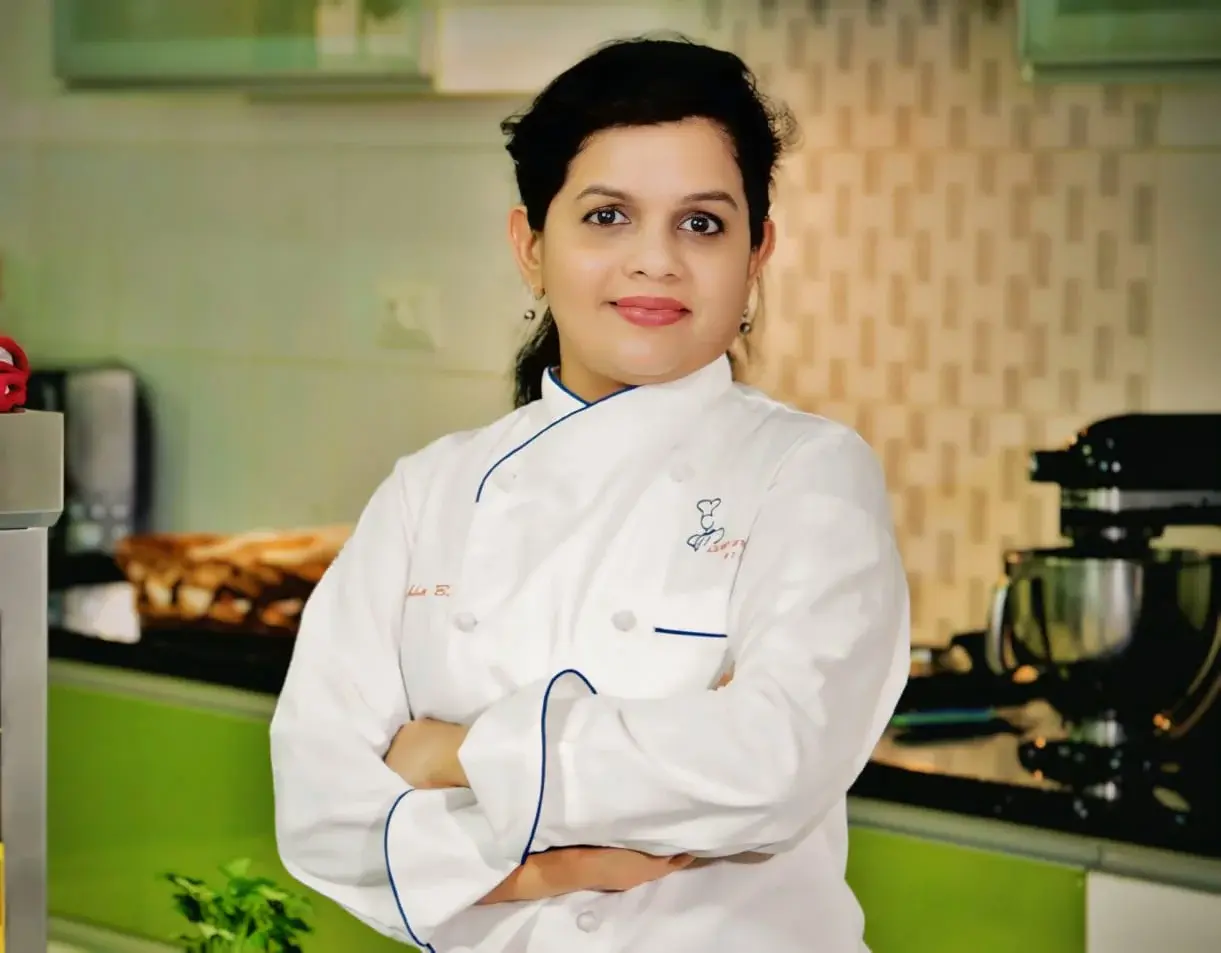
Shobha Bhat

Founder and Pastry Chef
Celesteyum Academy is the culmination of years of passionate baking and Shobha‘s dedication to teaching the best practices in the world of baking. Coming from a family deeply entrenched in the hospitality industry, her journey into the world of baking began a decade ago.