Professional Baking Skills You Learn in a Baking Diploma Course
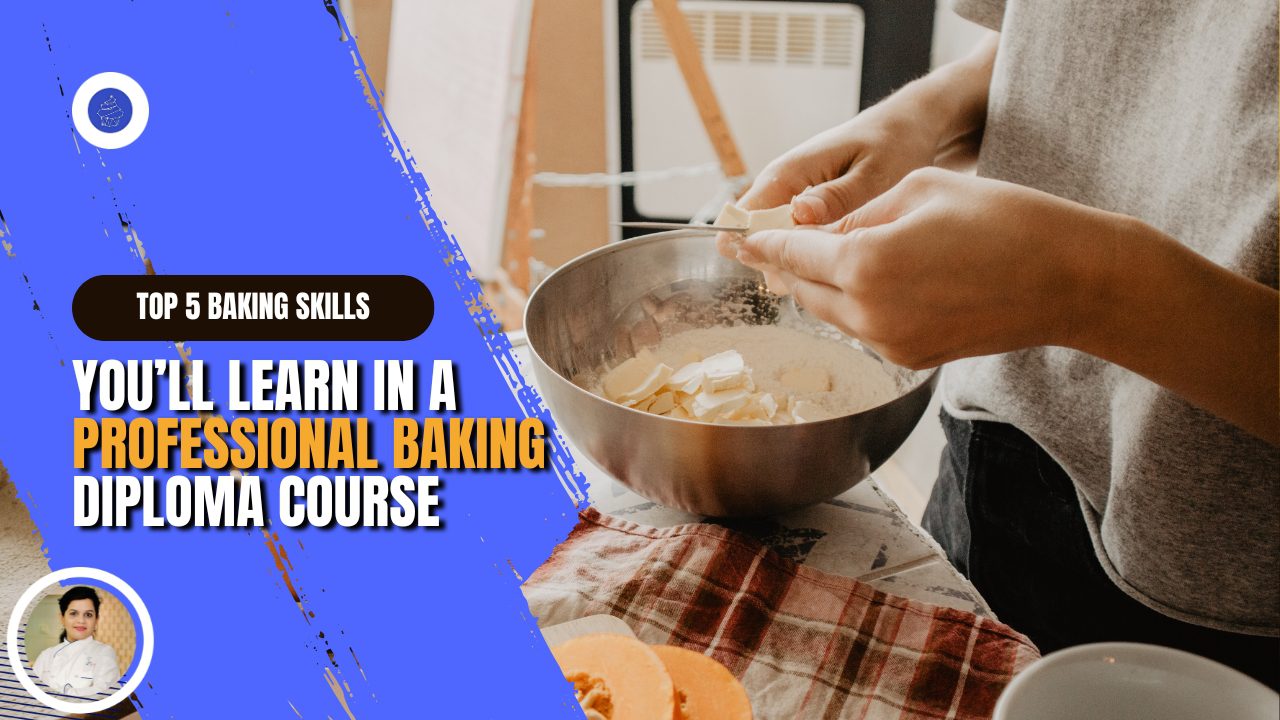
Professional baking involves much more than following recipes. The most important professional baking skills combine technical understanding, practical accuracy, organisation, food safety and the ability to produce consistent results across different products and production conditions.
A structured baking diploma helps learners understand how ingredients behave, how production is organised and how techniques are applied repeatedly in a professional bakery or pastry environment. These bakery and patisserie skills can include everything from dough fermentation and pastry preparation to production planning, troubleshooting and kitchen discipline.
A diploma in bakery and patisserie develops skills across bread production, pastry, cakes, chocolate, food safety and professional bakery workflow. If you are researching the skills learned in a baking diploma, it is therefore useful to look beyond the number of recipes included in the syllabus and focus on the transferable techniques developed through practical training.
Learners seeking broader professional training can explore Celesteyum Academy’s Advanced Diploma in Professional Patisserie & Confectionery. A shorter structured pathway is available through the Short-Term Diploma in Professional Patisserie & Confectionery.
The sections below explain five major groups of baking diploma skills, followed by the production, troubleshooting and workplace abilities that separate professional baking from recipe-based home baking.
1. Dough, Fermentation & Bread Baking Skills
Understanding dough is one of the fundamental technical skills in professional baking. Bakers need to understand how flour, water, yeast, salt, fats and other ingredients influence dough strength, fermentation, texture and the finished product.
Instead of relying only on fixed timings, learners gradually develop the ability to observe how dough behaves during mixing, bulk fermentation, proofing, shaping and baking.
Important bread baking skills include:
- Understanding gluten development and dough structure
- Controlling fermentation time and temperature
- Mixing and kneading correctly
- Handling lean and enriched doughs
- Shaping different bread products
- Scoring bread before baking
- Recognising under-proofed and over-proofed dough
- Managing baking temperature
- Maintaining consistency between repeated batches
These skills apply across breads, rolls, brioche, buns, focaccia, viennoiserie and many other bakery products. Learners interested in focused bread training can explore Bread Baking Fundamentals, Artisan Breads and Sourdough Bread.
Professional skill: an experienced baker does not judge fermentation only by the clock. Dough temperature, yeast activity, environment and dough development also influence when a product is ready for the next stage.
2. Pastry, Cake & Dessert Skills
Pastry skills require precision because relatively small changes in temperature, mixing, ingredient ratios or handling can affect texture and structure. Professional training therefore focuses on understanding techniques rather than simply memorising individual recipes.
Important pastry and dessert skills can include:
- Sponge and cake preparation
- Pastry dough preparation
- Pies and tarts
- Pastry creams, fillings and mousses
- Gateaux and entremets
- Laminated dough and viennoiserie
- Glazing and finishing
- Plated dessert presentation
- Chocolate and confectionery work
- Cake assembly and decoration
Understanding pastry dough is particularly important because mixing, temperature and handling influence whether the finished pastry is crisp, flaky, tender or structurally stable. Read our guide on how professional pastry dough techniques work for a deeper explanation.
Learners interested in particular categories can also explore Classic French Pastries, Cake Decoration Classes and Chocolate Making Courses.
3. Mise en Place, Workflow & Bakery Production Skills
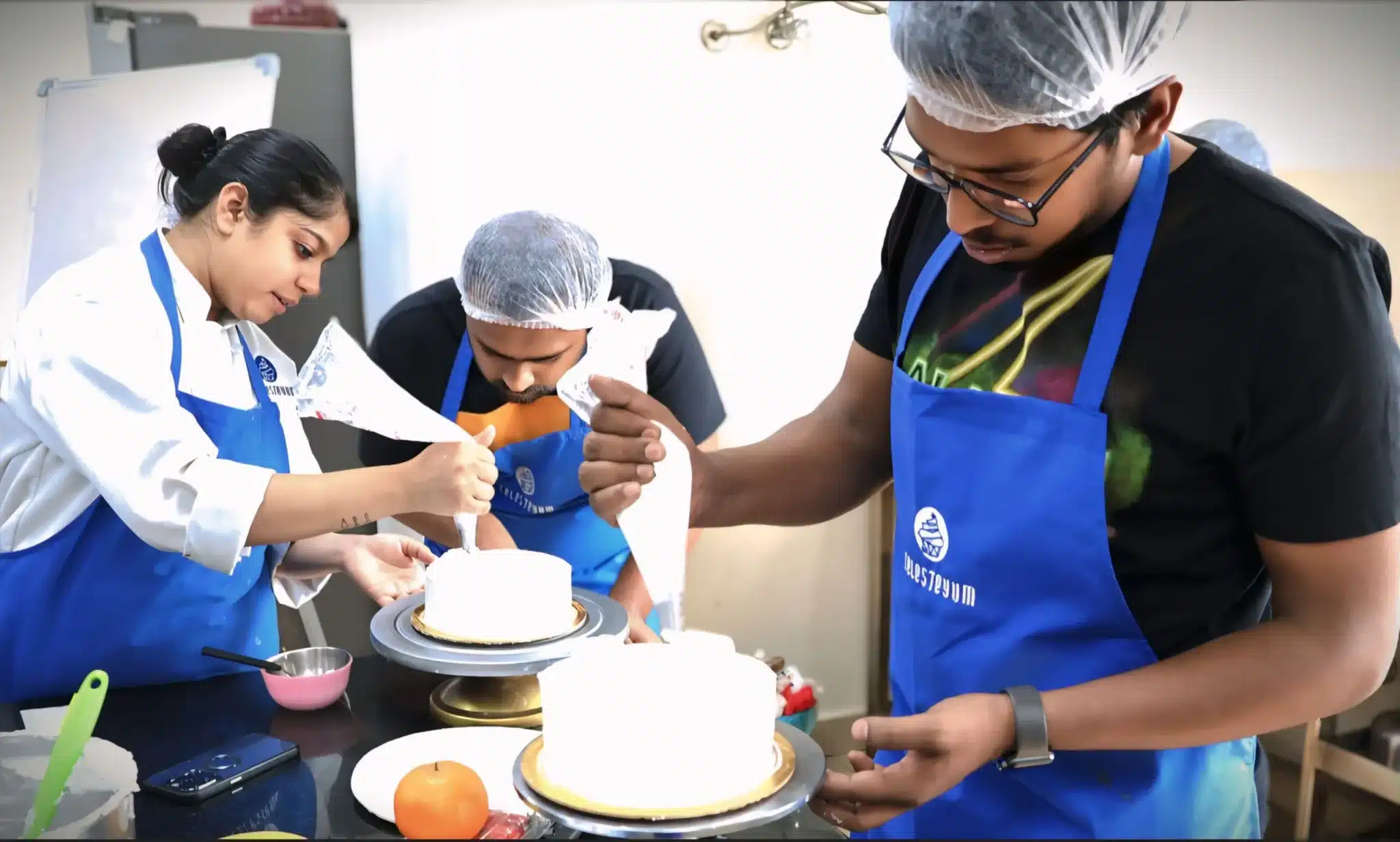
Some of the most important professional baker skills are not individual recipes at all. Commercial bakeries need people who can organise production, work accurately and keep several preparations moving at the same time.
This makes bakery production skills a major difference between casual baking and professional work.
Learners need to become familiar with:
- Mise en place
- Ingredient weighing and preparation
- Recipe scaling
- Production sequencing
- Time management
- Equipment planning
- Batch preparation
- Storage and holding
- Quality checks
- Basic recipe costing and portion awareness
- Reducing avoidable ingredient and production waste
- Maintaining consistency between batches
Why Mise en Place Matters in a Bakery
Mise en place means preparing and organising ingredients, equipment and the workstation before production begins. In a professional kitchen, good preparation makes it easier to manage several products, reduces avoidable errors and prevents time from being lost searching for ingredients or equipment during production.
Basic costing awareness is also useful in professional bakery production. Accurate weighing, appropriate portion sizes and waste control affect both product consistency and the cost of producing each batch.
Production skills become increasingly important when a baker moves from making a few individual products to larger quantities. Our guide on scaling from small batches to bulk bakery production explains how planning, systems and consistency change as volume increases.
4. Advanced Baking & Patisserie Techniques
Once learners have developed strong fundamentals, professional training can introduce more technically demanding bakery and patisserie methods. These techniques often require greater control over temperature, structure, timing and finishing.
Depending on the programme and curriculum, advanced skills may include:
- Laminated dough preparation
- Croissants and other viennoiserie
- Entremet assembly
- Glazing techniques
- Chocolate tempering and decorative work
- Sugar work
- Structured cake preparation
- Advanced finishing and presentation
- Bread shaping and scoring
- Working with several textures within one dessert
Advanced techniques require learners to understand why a process works. Lamination, for example, depends heavily on maintaining suitable dough and butter temperatures. Entremets require careful planning of textures, layers, setting, freezing, glazing and final presentation.
The WorldSkills Pâtisserie and Confectionery skill area also provides an international reference for the technical competencies associated with professional pastry and confectionery work.
5. Food Safety, Kitchen Discipline & Professional Baking Skills
Technical knowledge alone is not enough in a professional bakery. Professional baking skills also include hygiene, organisation, communication and the discipline required to work safely and consistently around other people.
Food Safety
Safe handling, storage, cleaning and awareness of ingredients that require controlled conditions.
Organisation
Maintaining a clean workstation, preparing ingredients correctly and following an efficient workflow.
Time Management
Coordinating preparation, proofing, baking, cooling and finishing within production deadlines.
Communication
Working clearly with chefs, assistants, supervisors and other members of the production team.
Problem-Solving
Identifying why a preparation failed and knowing which part of the process should be adjusted.
Professional Discipline
Following procedures, maintaining standards, accepting feedback and producing consistently even during busy periods.
Food safety is particularly important because bakeries may handle dairy products, eggs, creams, chocolate, prepared fillings and other ingredients that require appropriate storage and handling.
Read our guide on food safety and hygiene for professional bakers. For official Indian guidance, refer to the FSSAI hygiene requirements.
Professional kitchens also depend heavily on communication and teamwork. Our article on soft skills for a baking career explores these workplace abilities in greater detail.
Bakery and Patisserie Skills Learned in Professional Training
The five areas above work together rather than existing as separate subjects. Bread production requires organisation and food safety. Pastry requires temperature control and planning. Cake decoration depends on strong basic production skills before finishing even begins.
| Skill Area | What You Learn | Why It Matters Professionally |
|---|---|---|
| Bread & Fermentation | Dough handling, proofing, shaping, fermentation and baking. | Helps produce consistent bread and dough-based products. |
| Pastry & Patisserie | Pastry dough, creams, mousses, laminated products, desserts and finishing. | Develops technical precision for pastry production. |
| Cakes & Decoration | Sponge preparation, layering, frosting, finishing and decorative work. | Supports professional cake and celebration-product production. |
| Chocolate & Confectionery | Tempering, moulding, fillings and confectionery methods. | Develops temperature control and specialist confectionery ability. |
| Bakery Production | Mise en place, weighing, scaling, batching, costing awareness, workflow and quality checks. | Allows skills to be applied efficiently and consistently in commercial production. |
| Food Safety | Hygiene, storage, handling and clean working practices. | Supports safe professional food production. |
| Professional Skills | Time management, teamwork, communication and problem-solving. | Supports reliable performance in a working kitchen. |
Basic Baking Skills vs Professional Baking Skills
A useful way to understand professional training is to compare the objective of home baking with the requirements of commercial production.
| Area | Basic or Home Baking | Professional Baking |
|---|---|---|
| Recipes | Following a recipe to produce one successful item. | Understanding the process well enough to reproduce and troubleshoot the product. |
| Quantity | Usually small batches. | Repeated or larger batches produced to a schedule. |
| Timing | More flexibility around preparation. | Several products may need to be coordinated simultaneously. |
| Consistency | Minor variation may be acceptable. | Products should meet expected standards repeatedly. |
| Organisation | One or two preparations at a time. | Mise en place and production planning become essential. |
| Troubleshooting | A failed recipe may simply be repeated. | The baker should understand what failed and adjust the relevant process. |
| Cost & Waste Awareness | Cost may be a secondary consideration. | Portioning, ingredient use and avoidable waste can affect commercial production costs. |
This is why the phrase professional baking skills covers much more than the ability to make breads, cakes or desserts. It includes the knowledge and discipline needed to control the entire production process.
Why Professional Baking Skills Go Beyond Recipes
Many beginners measure progress by the number of recipes they know. Professional development works differently.
The most useful baking knowledge is transferable. Understanding fermentation helps across many bread products. Knowledge of aeration and emulsification applies to cakes, creams and desserts. Temperature control affects chocolate, laminated dough, pastry and storage.
Likewise, production planning, accurate weighing, costing awareness and food safety apply across almost every bakery product.
This is why structured professional training places value on repetition, technique, troubleshooting and consistency rather than simply completing the longest possible list of recipes.
Why Consistency Is One of the Most Important Professional Baker Skills
A product turning out well once is different from producing it successfully every day. Professional bakeries depend on consistent products because customers and businesses expect the same quality from one batch to the next.
Consistency depends on factors such as:
- Accurate weighing
- Standardised recipes
- Correct mixing methods
- Ingredient temperature
- Fermentation control
- Baking time and temperature
- Equipment management
- Ingredient quality
- Correct storage
- Production discipline
Repeated hands-on practice helps learners recognise how small variations affect the final product. This is one reason practical training matters for someone moving from home baking into professional bakery or pastry work.
Professional mindset: the objective is not merely to make a good product. It is to understand the process well enough to make that product consistently and recognise what to adjust when conditions change.
What Skills Are Needed to Become a Professional Baker?
Someone preparing for a bakery career should develop a combination of technical, production and workplace skills.
Technical Skills
Bread, dough, pastry, cakes, ingredient functions, chocolate, fermentation, temperature and finishing.
Accuracy
Precise weighing, recipe execution, scaling and consistent application of production methods.
Production Planning
Mise en place, sequencing, batch preparation, timing and efficient use of equipment.
Quality Control
Recognising correct texture, flavour, structure, appearance and product consistency.
Troubleshooting
Understanding why a dough, cake, pastry or chocolate preparation did not perform as expected.
Workplace Skills
Communication, teamwork, organisation, adaptability, reliability and the ability to accept feedback.
Not every baker needs to specialise in every product category. However, exposure to multiple areas can make it easier to identify your strengths before choosing a specialisation. Read Why Learning Multiple Baking Categories Gives You a Career Advantage for more detail.
How a Professional Baking Diploma Develops Practical Skills
A professional diploma gives learners an opportunity to develop baking diploma skills gradually through demonstration, supervised production, repetition and feedback.
Watching a technique can explain what should happen. Performing it yourself teaches you what the process feels and looks like in practice.
Through repeated production, learners can gradually become better at recognising:
- Correct dough consistency
- Appropriate fermentation stages
- Proper whipping and mixing stages
- Desired cake texture
- Correct pastry thickness and structure
- Chocolate temperature and handling
- Finishing quality
- Production timing
- Common mistakes and possible corrections
Professional training is therefore most useful when learners have opportunities to practise rather than only observe.
If you want to compare course formats before deciding, read our guide on how to choose the right baking course for your career goal.
How Bakery and Patisserie Skills Support Career Development
Strong technical skills provide a foundation for professional work, but career development also depends on experience, reliability and professional behaviour.
Depending on their interests and experience, trained learners may eventually explore work in:
- Bakery production
- Pastry kitchens
- Artisan bread production
- Cake and dessert production
- Chocolate and confectionery
- Cafés and hospitality businesses
- Home bakeries
- Independent dessert or bakery businesses
The exact route differs from person to person. Someone interested in breads may develop very different specialist skills from a learner who prefers pastry, chocolate or cake decoration.
For the career side of this topic, read our guide to the career path after a baking diploma and our article on career opportunities after a Diploma in Professional Patisserie.
Frequently Asked Questions About Professional Baking Skills
What skills do you learn in a professional baking diploma?
A professional baking diploma can develop skills in bread and dough handling, fermentation, pastry preparation, cakes, chocolate, production planning, food safety, accurate weighing, time management, quality control and professional kitchen organisation.
What are the most important professional baking skills?
Important professional baking skills include ingredient understanding, accurate weighing, dough handling, fermentation control, temperature management, pastry techniques, food safety, production planning, troubleshooting and product consistency.
What are technical skills in baking?
Technical baking skills are practical abilities used to control production processes. Examples include mixing, fermentation, lamination, pastry preparation, cake production, temperature control, chocolate handling, baking and finishing.
What skills are needed to become a professional baker?
A professional baker needs technical production skills as well as accuracy, organisation, time management, food-safety awareness, consistency, troubleshooting, teamwork and communication.
What skills does a pastry chef need?
Pastry professionals benefit from skills in pastry dough, creams, mousses, cakes, laminated dough, desserts, chocolate, temperature control, finishing, presentation, production planning and kitchen organisation.
Why is mise en place important in baking?
Mise en place helps bakers organise ingredients, equipment and production tasks before work begins. Good preparation reduces avoidable errors and makes it easier to manage several products efficiently.
Is food safety part of professional baking training?
Food safety is an important part of professional bakery production because bakers handle ingredients, equipment, work surfaces, prepared fillings and finished products that need appropriate hygiene and storage practices.
What is the difference between home baking and professional baking skills?
Home baking may focus primarily on producing individual recipes, while professional baking also requires repeatable quality, production planning, larger batches, food safety, efficient workflow, troubleshooting and coordination with other kitchen staff.
Can professional baking skills be learned through practice?
Yes. Theory helps explain techniques, but repeated hands-on practice develops control over dough, temperature, timing, texture, finishing and production workflow.
Do professional baking courses teach more than recipes?
A structured professional programme can teach ingredient behaviour, production techniques, food safety, planning, quality control, costing, organisation and troubleshooting in addition to individual products and recipes.
Build Your Professional Baking Skills
Developing strong professional baking skills takes time, repetition and an understanding of the processes behind each product. Training can provide a structured environment for developing dough handling, pastry techniques, advanced baking methods, production planning, food safety and professional kitchen discipline.
When comparing professional programmes, look at the curriculum, amount of hands-on practice, instructor guidance, course format and how closely the training matches your intended career direction.
Celesteyum Academy in Whitefield offers two professional diploma pathways that learners can compare according to the depth and format of training they need.
Advanced Diploma
For learners seeking broader professional training across baking, patisserie and confectionery.
Explore Advanced DiplomaShort-Term Diploma
For learners seeking structured professional baking and patisserie training in a shorter format.
Explore Short-Term DiplomaUPCOMING CLASSES
- Artisan Breads Workshop in Bangalore
October 12, 2026 - Cookies and Brownies Class in Bangalore
October 17, 2026 - Breakfast Pastries Course in Bangalore
October 24, 2026 - Bakers Foundation Program in Bangalore
October 26, 2026 - Bread Fundamentals Class in Bangalore
November 2, 2026 - Breakfast Pastries Course in Bangalore
November 5, 2026 - Bakers Foundation Program in Bangalore
November 9, 2026 - Bread Fundamentals Class in Bangalore
November 14, 2026 - Sour Dough Breads Class in Bangalore
November 14, 2026

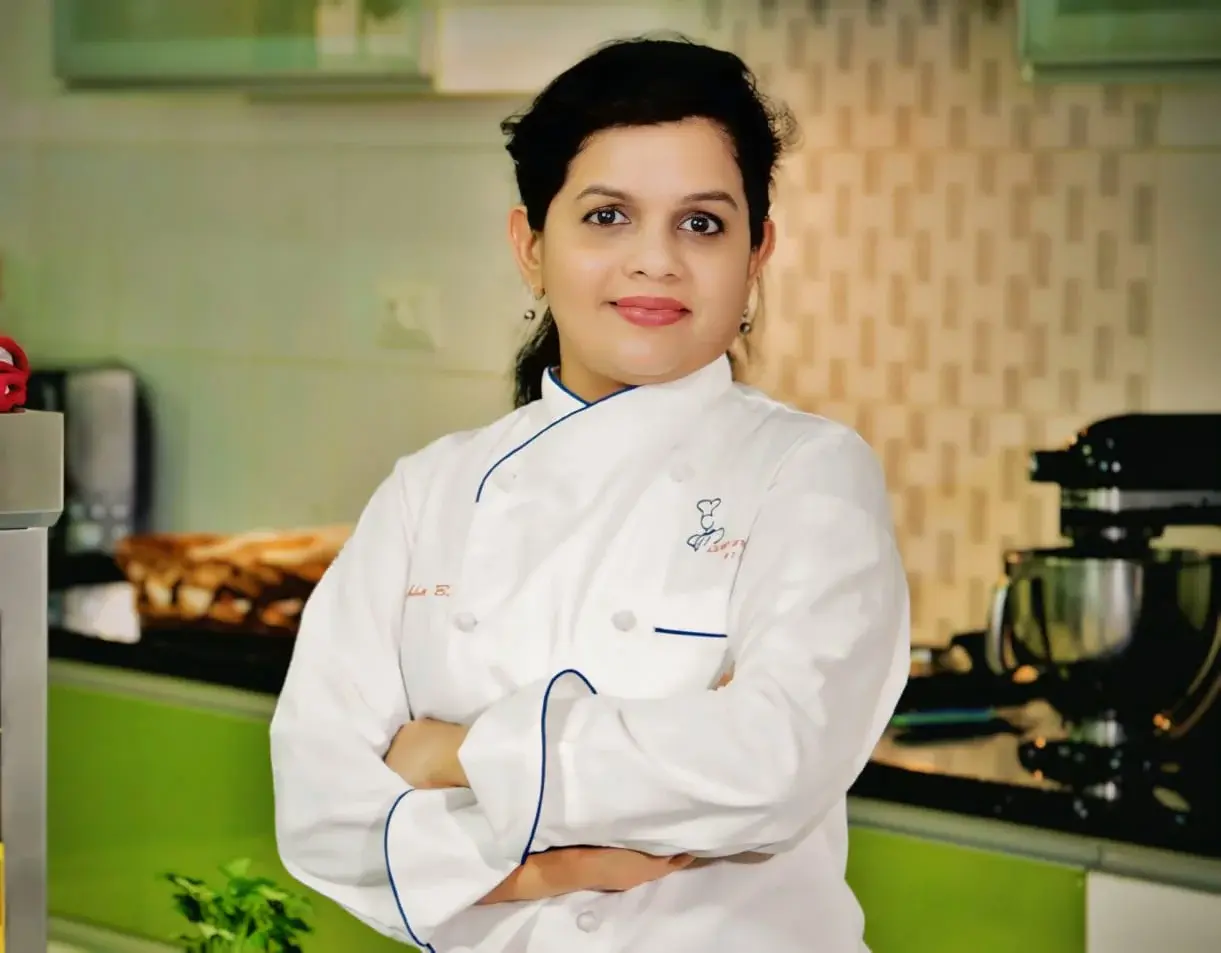
Shobha Bhat

Founder and Pastry Chef
Celesteyum Academy is the culmination of years of passionate baking and Shobha‘s dedication to teaching the best practices in the world of baking. Coming from a family deeply entrenched in the hospitality industry, her journey into the world of baking began a decade ago.