Bakery & Patisserie Diploma Explained: What Students Actually Learn in Professional Training
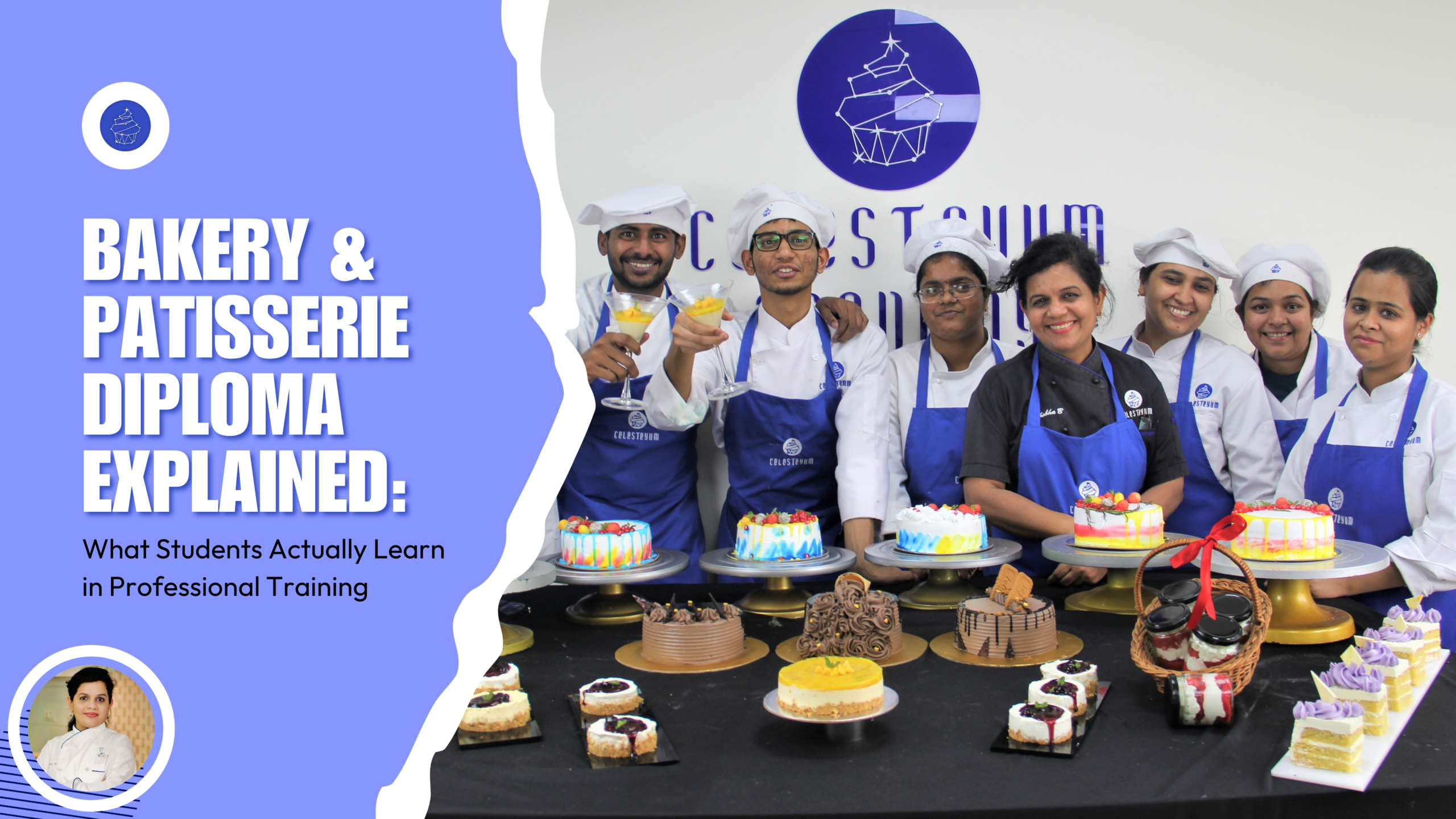
Almost every academy claims to offer “hands-on” training. Very few explain what that actually means. Watching a chef demonstrate a recipe and producing the same recipe yourself, repeatedly, under supervision, are two very different experiences, and the gap between them is what separates a certificate from real skill. Knowing what makes professional baking training genuinely hands-on is the most useful thing you can learn before choosing a course.
This guide explains what students actually learn in a professional bakery and patisserie diploma, and what each skill looks like in practice: weighing and scaling, mixing, fermentation, lamination, oven management, finishing, troubleshooting, production planning, sanitation, assessment and repeatability.
Looking for professional bakery courses? Explore our diploma programme at Celesteyum Academy.
What Does “Hands-On” Actually Mean?
The word is used loosely, so it helps to define it. In hands-on baking training, every student produces the product at their own station: they scale the ingredients, mix, ferment, shape, bake and finish it themselves, while an instructor watches and corrects. In demonstration-led training, the instructor does the work and students watch.
| Factor | Demonstration-led | Individual production-led |
|---|---|---|
| Who handles the dough | The instructor; students watch | Every student, at their own station |
| What you learn to judge | What the finished result looks like | How dough feels, looks and smells at each stage |
| Feedback | General, given to the group | Specific to your own work, while you can still correct it |
| Mistakes | Rarely seen, because the instructor avoids them | Made, diagnosed and fixed by you |
| What you take away | Notes, photos and recipes | A repeatable skill |
Demonstrations still have a place, especially for introducing a new technique. But they are the starting point of a lesson, not the lesson itself.
Why Practice Hours Matter More Than Counting Recipes
“Over 50 recipes” is easy to advertise and tells you very little. Making a recipe once teaches you the recipe. Making a dough several times, with an instructor correcting your hydration, your mixing time and your shaping, teaches you the process behind it.
That is why supervised repetition is the core of skilled baking. Once you can control hydration, dough temperature and fermentation in one dough, you can adapt those skills to others. A student who has made fewer recipes many times usually outperforms one who has made many recipes once, because they have learned to judge, not just to follow.
The Core Skills, One by One
Here is what each skill looks like when it is taught hands-on, and what goes missing when it isn’t.
Weighing and Scaling
What students do: Students weigh every ingredient themselves on a scale, including small quantities such as salt and yeast, and learn to scale dough pieces to equal weights. They work in grams and learn baker’s percentages, so a formula can be scaled up or down without guessing.
What goes wrong without practice: Inconsistent batches, pieces that bake unevenly because they differ in weight, and formulas that “worked once”.
Mixing
What students do: Students mix by hand and by machine, learning the stages of mixing, how long each dough needs, and how to check gluten development and final dough temperature.
What goes wrong without practice: Over- or under-mixed dough, tight dough that tears, and a dense crumb.
Fermentation
What students do: Students manage bulk fermentation and proofing using time and temperature, and learn to judge readiness by volume, feel and the poke test rather than by the clock alone. The same dough ferments faster in a warm kitchen than in a cool one, and only practice teaches you to see the difference.
What goes wrong without practice: Over-proofed dough that collapses, under-proofed dough that bakes dense, and products that vary from day to day.
Lamination
What students do: Students fold butter into dough, complete the turns, and learn when to rest and chill between them. They then shape and proof the dough. This is where butter temperature and dough temperature must be controlled together, and it is the foundation of laminated doughs like croissants and puff pastry.
What goes wrong without practice: Butter breaking through the dough, leaking in the oven, and flat layers instead of an open, flaky crumb.
Oven Management
What students do: Students load and unload ovens, use steam, rotate trays to correct hot spots, and adjust temperature for different products. They learn to judge doneness by colour, sound and feel, not only by the timer.
What goes wrong without practice: Pale or burnt bases, uneven bakes, and centres that collapse because they came out too early.
Finishing
What students do: Students glaze, fill, pipe, dust and plate, and learn to keep portions and presentation consistent. Finishing is what the customer sees first.
What goes wrong without practice: A good bake spoiled by sloppy presentation, and products that can’t be sold at a professional standard.
Troubleshooting
What students do: Instructors let students see problems and then teach them to diagnose: what changed in temperature, hydration, timing or weight? Working backwards from the fault to the cause is the skill that separates a baker from someone who follows recipes.
What goes wrong without practice: Students who can only follow a recipe until something changes, then have no way to fix it.
Production Planning
What students do: Students work backwards from a service or delivery time to decide what is mixed first, what needs resting or chilling, how oven space is shared, and how much of each product to make.
What goes wrong without practice: Good products that arrive late, oven bottlenecks, and wasted batches.
Sanitation
What students do: Students clean and set up their own stations, follow personal hygiene rules, and learn to prevent cross-contamination, manage allergens, control temperatures for dairy, eggs and fillings, and store and label products correctly.
What goes wrong without practice: Hygiene habits that never form, which can damage a bakery’s reputation overnight.
Assessment and Repeatability: How Training Proves Skill
Assessment in genuine professional training is practical. Students are judged on the product they make: weight, size, colour, crumb, finish, timing and cleanliness. A written test shows what you know, but a practical assessment shows what you can do.
Repeatability is the real goal. A bakery doesn’t pay for one good croissant; it pays for the fifth batch of the day to match the first. A customer who buys a loaf on Monday expects the same loaf on Friday. Training that builds repeatability, through weighed formulas, controlled temperatures and repeated production, builds the skill employers and customers actually value.
How to Judge Whether Training Is Really Hands-On
Before choosing a bakery training institute, ask these questions:
- Will I work at my own station, or share one with several students?
- How many hours per week will I actually spend producing, not watching?
- Will I weigh and scale my own ingredients?
- Will I repeat each product under supervision until the result is consistent?
- Will I handle fermentation, lamination and oven work myself?
- Will I learn to troubleshoot when something goes wrong?
- Is assessment practical, based on the product I make?
- Are sanitation and production planning part of regular sessions?
Where Professional Training Fits Into a Baking Career
Bakeries and patisseries hire for consistency, speed and hygiene, and none of these can be learned from a recipe card. They come from guided repetition in a production setting. Reading about technique is one thing. Feeling when a dough is properly developed, catching a fermentation problem before the oven, and producing the same result batch after batch is another, and that comes only from supervised practice.
Our New Diploma Batch Starts on 2nd November 2026
If you want to move beyond theory and build real skills, our new diploma batch starts on 2nd November 2026. Explore our professional baking course at Celesteyum Academy and learn with guided, hands-on practice.
Ready to start? The new diploma batch begins on 2nd November 2026. Call 91-81055 12065 / 91-9535207932 or visit Celesteyum Academy to enrol.
UPCOMING CLASSES
- Artisan Chocolates Class in Bangalore
October 7, 2026 - Cakes and Pastries Class in Bangalore
October 10, 2026 - Artisan Breads Workshop in Bangalore
October 12, 2026 - Cookies and Brownies Class in Bangalore
October 17, 2026 - Breakfast Pastries Course in Bangalore
October 24, 2026 - Bread Fundamentals Class in Bangalore
November 14, 2026 - Cakes and Pastries Class in Bangalore
November 21, 2026 - Breakfast Pastries Course in Bangalore
November 28, 2026 - Cookies and Brownies Class in Bangalore
December 5, 2026
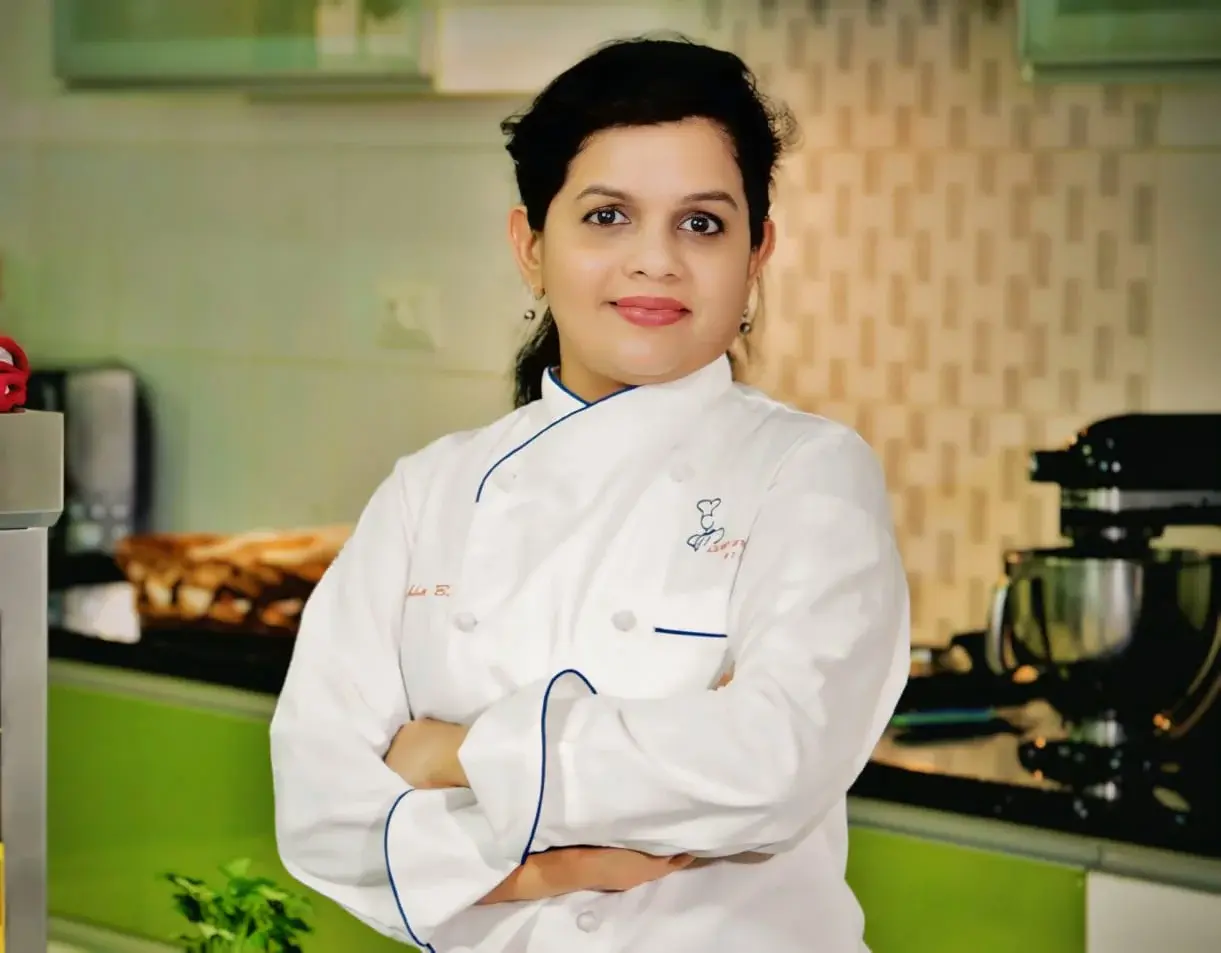
Shobha Bhat

Founder and Pastry Chef
Celesteyum Academy is the culmination of years of passionate baking and Shobha‘s dedication to teaching the best practices in the world of baking. Coming from a family deeply entrenched in the hospitality industry, her journey into the world of baking began a decade ago.