Types of Pastry Dough Explained: Shortcrust, Puff, Choux, Filo & Laminated Dough
Ask a baker how many types of pastry there are, and you’ll get a list of names: shortcrust, puff, choux, filo. But a list doesn’t help you bake. What matters is understanding why each dough behaves the way it does, so you know what to do when it doesn’t.
Knowing the types of pastry dough by their structure, fat behaviour and leavening is what separates bakers who follow recipes from bakers who understand and control the result.
This guide compares the different types of pastry across seven factors that matter in a professional kitchen: structure, fat behaviour, leavening, gluten development, temperature sensitivity, typical products, and common failures.
Want to learn these doughs hands-on? Explore our Classic French Pastries course .
Pastry Dough Types at a Glance
| Dough | Structure | Fat Behaviour | Leavening | Gluten Development |
|---|---|---|---|---|
| Shortcrust | Rubbed | Incorporated | None | Low |
| Puff | Laminated | Layered | Steam | Moderate |
| Choux | Cooked | Incorporated | Steam | Moderate |
| Filo | Stretched | Layered (brushed) | Minimal steam | High |
| Laminated yeasted | Laminated | Layered | Yeast + steam | Moderate-high |
Every other difference between these doughs follows from these basic characteristics. The structure of a dough tells you how it is made, while the behaviour of fat and gluten helps determine how it bakes.
Shortcrust Pastry
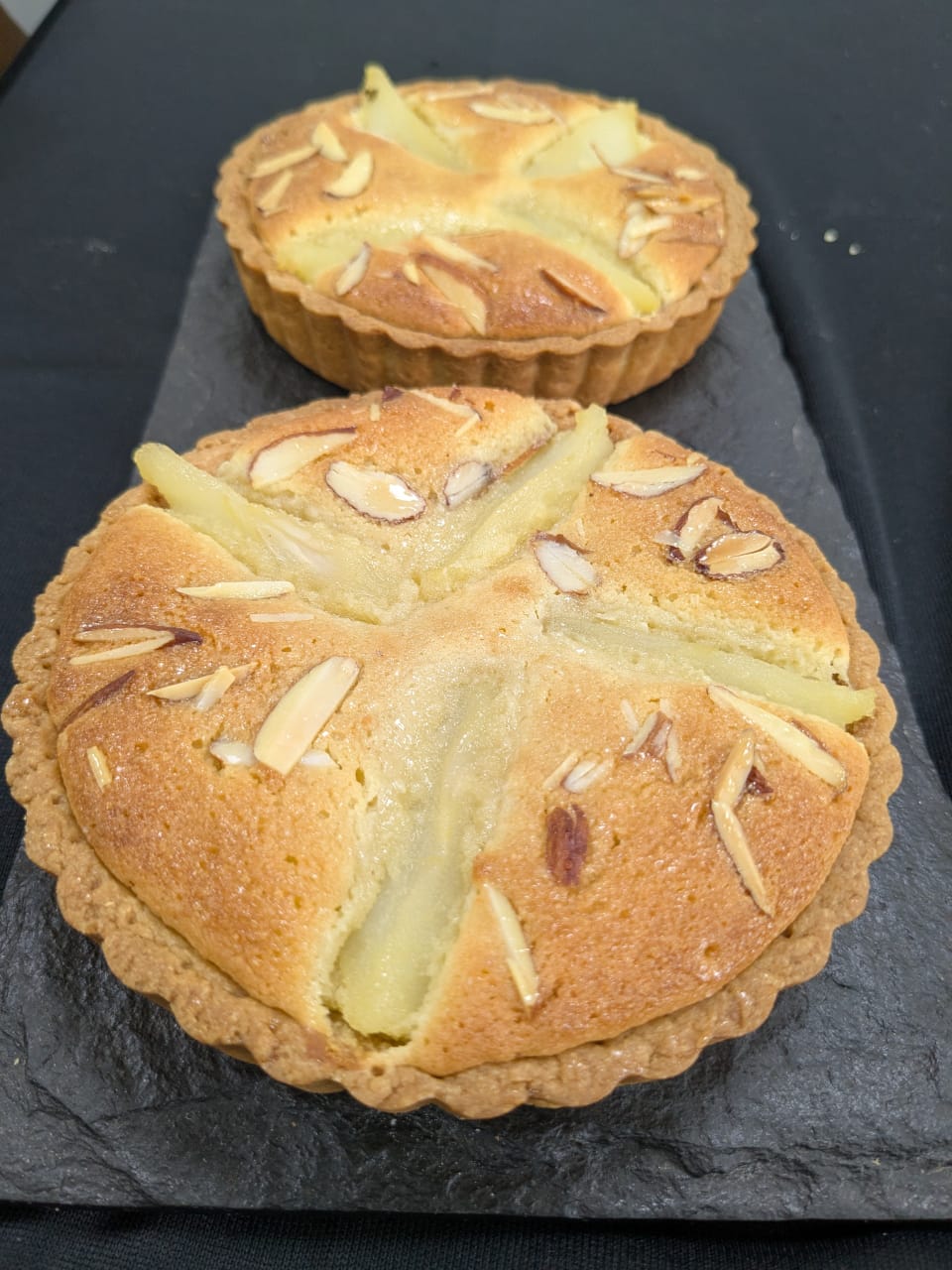
Shortcrust is the foundation of many pastry techniques taught early in professional baking training. Cold fat is rubbed into flour until the mixture looks like breadcrumbs, then bound with a little cold water.
| Element | Shortcrust Pastry |
|---|---|
| Structure | Rubbed |
| Fat behaviour | Incorporated: fat coats the flour particles |
| Leavening | None |
| Gluten development | Low |
| Temperature sensitivity | Fat must stay cold, or it melts into the flour and the pastry turns greasy and hard instead of short |
| Typical products | Tart shells, quiche, pies, savoury pasties |
| Common failures | Shrinking in the oven, toughness, soggy base |
The fat coating the flour is what makes shortcrust “short”. It blocks water from reaching the proteins, which limits gluten development.
Shrinkage and toughness often indicate too much water, too much handling, or insufficient resting time before baking.
Puff Pastry
Puff pastry is one of the best-known examples of laminated dough. A butter block is folded into a flour-and-water dough through a series of turns, creating hundreds of alternating layers of dough and fat.
| Element | Puff Pastry |
|---|---|
| Structure | Laminated |
| Fat behaviour | Layered: butter stays as separate sheets between the dough |
| Leavening | Steam. Water in the dough and butter turns to steam and lifts the layers |
| Gluten development | Moderate in the base dough, which needs enough strength to hold the butter without tearing |
| Temperature sensitivity | Butter must be cold but pliable. If it is too cold, it can shatter; if it is too warm, it melts into the dough and the layers are lost |
| Typical products | Vol-au-vents, palmiers, millefeuille, sausage rolls, tart bases |
| Common failures | Butter leaking out, uneven rise, greasy or dense layers |
With each turn, the number of alternating layers increases significantly, creating the structure that gives puff pastry its height and flakiness.
Rough puff and inverse puff are variations on the same principle. In rough puff, butter is incorporated differently into the dough, while in inverse puff the dough is enclosed within the butter layer.
The principle remains the same: keep the fat and dough separate long enough for steam in the oven to lift the layers.
Choux Pastry
Choux is the odd one out among these kinds of dough. Water, butter and flour are cooked together on the stove, then beaten with eggs to form a smooth paste.
| Element | Choux Pastry |
|---|---|
| Structure | Cooked |
| Fat behaviour | Incorporated: butter melts into the liquid and forms an emulsion |
| Leavening | Steam only, with no raising agent |
| Gluten development | Moderate. Cooking gelatinises the starch, and the structure comes from starch and egg protein |
| Temperature sensitivity | The paste must cool before the eggs go in, or they can begin to cook. Oven heat must start high and then reduce to help dry the shell |
| Typical products | Éclairs, profiteroles, gougères, Paris-Brest, cream puffs |
| Common failures | Collapsing, flat shells, cracked tops, raw or soggy interiors |
Choux rises because of the amount of moisture it contains. As the dough heats, steam inflates the pastry while the outer shell begins to set.
Opening the oven too early can release heat and steam before the structure has set properly, increasing the risk of collapse.
Filo Pastry
Filo is very different from choux. The dough is rolled and stretched until it becomes paper thin, and gluten development plays an important role in allowing the dough to stretch without tearing.
| Element | Filo Pastry |
|---|---|
| Structure | Stretched |
| Fat behaviour | Layered: butter or oil is brushed between separate sheets rather than worked into the dough |
| Leavening | Minimal. Small pockets of steam form between the sheets |
| Gluten development | High, allowing the dough to stretch very thin without tearing |
| Temperature sensitivity | Humidity matters more than heat. Sheets can dry out and crack quickly when left uncovered |
| Typical products | Baklava, spanakopita, strudel, savoury triangles |
| Common failures | Tearing, brittle sheets, soggy layers, uneven crispness |
Working with filo is largely about speed and moisture control. Keep the sheets protected from drying out, brush each layer evenly, and avoid overloading the filling.
Laminated Yeasted Dough: Croissant and Danish
This is where laminated dough meets bread.
The method shares many principles with puff pastry, but the dough also contains yeast. That means it requires proofing as well as folding and lamination.
| Element | Laminated Yeasted Dough |
|---|---|
| Structure | Laminated |
| Fat behaviour | Layered: a butter block is folded into an enriched dough |
| Leavening | Yeast plus steam |
| Gluten development | Moderate to high, allowing the dough to stretch without tearing during lamination |
| Temperature sensitivity | The dough must proof warm enough for the yeast to work while remaining cool enough to keep the butter from melting |
| Typical products | Croissants, pain au chocolat, Danish pastries |
| Common failures | Butter leaking during proofing, dense crumb, poor honeycomb structure |
Butter leakage during proofing is one of the classic signs of a temperature problem. If the dough becomes too warm, the butter can begin to melt before baking. Once the butter has leaked from the laminated layers, shaping alone cannot restore the intended structure.
How to Choose the Right Pastry Dough
Different pastry doughs are suited to different products and textures.
- Choose shortcrust for tarts, pies and quiches where a crisp, sturdy base matters.
- Choose puff pastry when you want height and flaky layers without yeast.
- Choose choux pastry for hollow shells designed to hold cream or other fillings.
- Choose filo pastry for crisp, paper-thin layers, particularly in sweet and savoury layered pastries.
- Choose laminated yeasted dough for pastries such as croissants and Danish pastries that need both layered structure and a soft, airy interior.
Professional bakers do not favour one dough over another. They match the dough to the product they want to create and learn to recognise from the dough's appearance, texture and behaviour when something has gone wrong.
Frequently Asked Questions About Pastry Dough
What are the main types of pastry dough?
The main types covered here are shortcrust, puff pastry, choux pastry, filo pastry and laminated yeasted dough. They differ primarily in their structure, how fat is incorporated, how they are leavened and how much gluten development they require.
What is the difference between puff pastry and laminated yeasted dough?
Both use lamination, where layers of dough and butter are created through folding. Puff pastry relies primarily on steam for lift, while laminated yeasted dough uses both yeast and steam. Croissants and Danish pastries are common examples of laminated yeasted dough.
Why does puff pastry rise without yeast?
Puff pastry contains alternating layers of dough and butter. During baking, moisture turns to steam. The steam expands between the layers and helps lift them, creating the pastry's characteristic height and flakiness.
Why does choux pastry rise?
Choux pastry is primarily leavened by steam. Its high moisture content produces steam during baking, which expands the pastry while the starch and egg proteins help the outer shell set.
Why is temperature important when making pastry dough?
Temperature affects how fat behaves. In shortcrust, the fat needs to remain cold. In puff pastry and laminated yeasted dough, butter must stay firm enough to remain in separate layers. If the butter becomes too warm and melts into the dough, the intended pastry structure can be lost.
Where This Skill Fits Into a Baking Career
Pastry is one of the clearest examples of why professional training goes beyond simply following a recipe.
Reading about pastry dough types is one thing. Feeling when butter is at the right temperature, judging the consistency of choux paste by sight, or recognising a lamination problem before the pastry reaches the oven requires practical experience.
These are skills that develop through repeated practice, observation and guided training.
At Celesteyum, students can develop these techniques through Classic French Pastries training , working hands-on with pastry doughs under supervision.
Learn Pastry Hands-On at Celesteyum
If you want to move beyond theory and practise the pastry techniques used in professional kitchens, explore Celesteyum's Classic French Pastries course .
You will work with these doughs under guided supervision and learn how to understand and control the result rather than simply follow a recipe.
Ready to start?
View the Classic French Pastries course , call +91 81055 12065 / +91 95352 07932 , or visit Celesteyum Academy to enrol.
UPCOMING CLASSES
- Diploma in Professional Patisserie and Confectionery
October 5, 2026 - PIES AND TARTS
October 5, 2026 - Artisan Chocolates Class in Bangalore
October 7, 2026 - Cakes and Pastries Class in Bangalore
October 10, 2026 - Artisan Breads Workshop in Bangalore
October 12, 2026 - Cookies and Brownies Class in Bangalore
October 17, 2026 - Breakfast Pastries Course in Bangalore
October 24, 2026 - Bread Fundamentals Class in Bangalore
November 14, 2026 - Cakes and Pastries Class in Bangalore
November 21, 2026
Shobha Bhat

Founder and Pastry Chef
Celesteyum Academy is the culmination of years of passionate baking and Shobha‘s dedication to teaching the best practices in the world of baking. Coming from a family deeply entrenched in the hospitality industry, her journey into the world of baking began a decade ago.