Baking Diploma vs Degree: Which Path Is Right for Your Career?
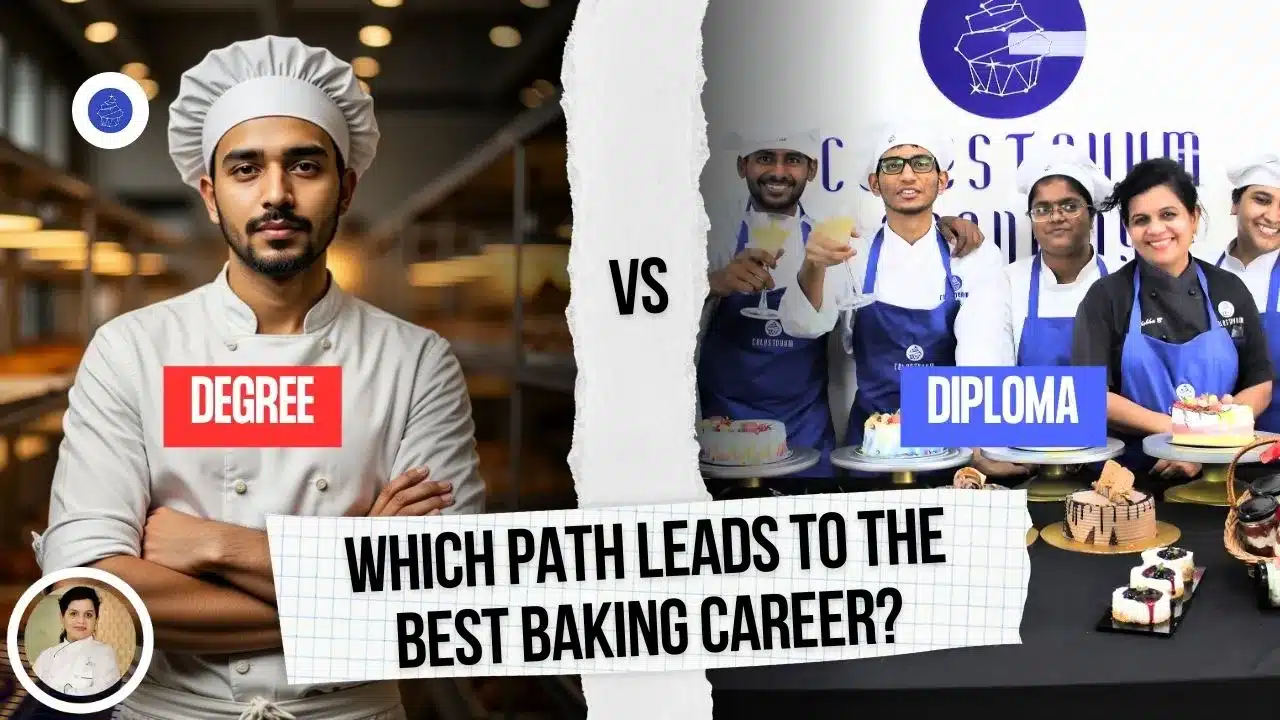
Choosing between a baking diploma and a degree is an important decision for anyone planning a professional career in baking, pastry or hospitality. The two qualifications serve different purposes, so the right option depends on what you want to learn, how you prefer to study and the type of career you want to build.
A professional baking diploma generally concentrates on practical bakery and patisserie training. A degree in culinary arts, hospitality or a related field normally covers a broader academic curriculum in which baking and pastry may form only one part of the programme.
Neither route is automatically better for every student. Someone focused specifically on bread, pastry, cakes or confectionery may prefer a specialised bakery diploma, while someone seeking broader hospitality education may prefer a degree.
If you are still comparing professional training options, our guide on how to choose the right baking course for your career goal explains the wider factors to consider.
Baking Diploma vs Degree: What Is the Main Difference?
The biggest difference between a baking diploma and a degree is usually the scope of study.
Professional Baking Diploma
Usually concentrates on practical bakery, pastry and patisserie skills within a focused professional curriculum.
Culinary or Hospitality Degree
Usually provides broader academic education that may include culinary arts, hospitality, food and beverage, management and related subjects.
A diploma can therefore suit learners who already know they want to focus on professional baking and pastry. A degree may be more appropriate for students who want broader exposure before deciding on a particular hospitality or culinary specialisation.
Important: course structures vary between institutions. Compare the actual curriculum, practical training, qualification awarded, admission requirements and current duration rather than choosing only because a programme is called a diploma or degree.
What Is a Professional Baking Diploma?
A professional baking diploma is generally designed around concentrated skill development in bakery, pastry, patisserie or confectionery.
Depending on the programme, practical training may cover:
- Bread and dough preparation
- Fermentation and proofing
- Cakes and sponge production
- Pastry dough and tarts
- Viennoiserie and laminated dough
- Chocolate and confectionery
- Cake decoration and finishing
- Food safety and hygiene
- Mise en place and production planning
- Product consistency and troubleshooting
The objective is normally to develop practical ability in a concentrated subject area rather than cover the full range of hospitality disciplines.
For a deeper look at the competencies developed during diploma training, read Professional Baking Skills You Learn in a Baking Diploma.
What Does a Degree in Culinary Arts or Hospitality Cover?
A degree related to culinary arts, hospitality or hotel management usually has a broader academic scope than a specialist bakery diploma.
Depending on the institution and programme, subjects may include:
- Food production
- Culinary fundamentals
- Bakery and pastry modules
- Food and beverage service
- Hospitality operations
- Food safety
- Business or management subjects
- General academic or industry modules
The amount of baking and pastry training can vary significantly between degree programmes. Students should therefore check the detailed syllabus rather than assuming every culinary or hospitality degree provides the same level of bakery specialisation.
Baking Diploma vs Degree Comparison
| Factor | Professional Baking Diploma | Culinary / Hospitality Degree |
|---|---|---|
| Main Focus | Focused bakery, pastry or patisserie skill development. | Broader culinary, hospitality or management education. |
| Learning Style | Often strongly practical and production-oriented. | Usually combines theory, practical modules and academic study. |
| Duration | Typically shorter than a degree, although duration varies by programme. | Usually a multi-year academic programme. |
| Bakery Specialisation | Can form the central subject of the programme. | May be one component within a wider curriculum. |
| Academic Breadth | Usually narrower and more specialised. | Usually broader across culinary or hospitality subjects. |
| Practical Production | Often concentrates heavily on hands-on bakery and pastry work. | Practical exposure depends on the programme and institution. |
| Best Suited For | Learners who already want to specialise in baking or pastry. | Learners seeking broader culinary or hospitality education. |
| Qualification | Diploma or another programme-specific professional qualification. | Academic degree awarded according to the programme and institution. |
This comparison describes common differences rather than fixed rules. The actual programme should always be evaluated before making a decision.
Practical Training vs Broader Academic Learning
One of the most important questions when comparing a baking diploma vs degree is how you prefer to learn.
A Diploma May Emphasise
- Hands-on production
- Repeated technique practice
- Ingredient behaviour
- Dough and fermentation control
- Pastry preparation
- Professional finishing
- Bakery workflow
- Troubleshooting
A Degree May Emphasise
- Broader academic study
- Culinary theory
- Hospitality operations
- Management subjects
- General food-production knowledge
- Food and beverage subjects
- Multiple hospitality disciplines
- Longer academic progression
For a learner who already knows that bread, pastry, cakes or confectionery will be the primary career direction, concentrated practical learning may be attractive. A learner who wants broader culinary or hospitality exposure may value the wider curriculum of a degree.

What Qualification Do You Need to Become a Professional Baker?
There is no single universal baking qualification that guarantees someone will become a professional baker.
Professional kitchens and employers may consider a combination of:
- Practical bakery skills
- Relevant training or qualification
- Professional experience
- Product portfolio
- Consistency
- Food-safety awareness
- Time management
- Ability to work within a production team
A professional baking diploma can provide structured technical training, while a degree may provide broader academic preparation. Practical ability and workplace experience remain important regardless of which educational path is chosen.
If your goal is specifically to work as a baker, read our guide on how to become a professional baker in Bangalore.
Do You Need a Degree to Become a Pastry Chef?
A degree is not the only educational route into pastry. Some learners develop their foundation through a specialist baking and pastry diploma and then build professional experience in pastry kitchens, bakeries or related environments.
Pastry work can require practical control over areas such as:
- Pastry dough
- Creams and fillings
- Cakes and gateaux
- Viennoiserie
- Entremets
- Chocolate and confectionery
- Temperature control
- Finishing and presentation
The appropriate qualification depends on the learner's objectives and the requirements of individual employers or further-study programmes.
For career-specific information, read What Can You Do With a Diploma in Professional Patisserie?.
Is a Baking Diploma Enough to Start a Professional Career?
A baking diploma can provide a practical foundation, but no course by itself guarantees employment or career progression.
After training, learners may continue developing through:
- Repeated practice
- Professional kitchen exposure
- Entry-level production work
- Portfolio development
- Specialisation
- Continuous learning
Possible directions can include bakery production, pastry kitchens, artisan breads, cakes, chocolate, confectionery or entrepreneurship depending on the learner's skills and experience.
For more detail, see our guide to the career path after a baking diploma.
How Career Outcomes Can Differ
The two education paths can lead towards different types of opportunities because their curricula are designed differently.
| Education Path | Possible Areas of Development |
|---|---|
| Baking Diploma | Bakery production, pastry work, artisan bread, cakes, desserts, chocolate, confectionery or bakery entrepreneurship. |
| Culinary / Hospitality Degree | Culinary production, hospitality operations, food and beverage, management-related roles or later specialisation in bakery and pastry. |
These are possible directions rather than guaranteed outcomes. Actual opportunities depend on the individual programme, practical ability, experience, location and employer requirements.
For Bangalore-specific salary information, read our dedicated guide on Bakery Chef Salary in Bangalore.
Baking Diploma After Class 12: What Should Students Consider?
Students interested in professional baking after school may compare specialist diploma training with broader degree education.
Before choosing, consider:
- Whether you already know you want to specialise in baking
- The programme curriculum
- Hands-on training
- Qualification awarded
- Current eligibility requirements
- Course duration
- Fees and additional expenses
- Location and schedule
- Future study plans
- Your preferred learning style
Students should always verify the current eligibility criteria of the specific institution before enrolling.
Our guide on baking courses after school provides additional information for students exploring this pathway.
Can a Baking Diploma Work for a Career Change?
A focused professional baking diploma can also be considered by adults who want to move from another field into baking or pastry.
A specialised programme may appeal to career changers because it can concentrate training on the technical skills they need rather than requiring them to complete a much broader academic curriculum.
Career changers should consider:
- Time available for practical training
- Current financial commitments
- Expected learning depth
- Whether the goal is employment or entrepreneurship
- The need for professional experience after training
A shorter programme is not automatically the better option. The correct choice depends on how much training and practice the learner needs.
Baking Qualification, Diploma and Certification: What Do the Terms Mean?
Terms such as baking qualification, baking certification, diploma and degree are sometimes used interchangeably in course searches, but they do not necessarily mean the same thing.
| Term | General Meaning |
|---|---|
| Degree | An academic qualification awarded through an eligible higher-education programme. |
| Diploma | A programme-specific qualification that often focuses on a defined professional or technical field. |
| Certificate | May indicate completion of shorter or specialist training depending on the provider and programme. |
| Course Completion Certificate | Evidence that a learner completed a particular programme; it should not automatically be treated as equivalent to a diploma or degree. |
Before enrolling, check exactly what qualification is awarded, who awards it, what the curriculum contains and whether it meets your intended career or further-study requirements.
Cost and Duration: Compare the Full Commitment
It is tempting to compare a diploma and degree only by tuition fees, but the total commitment is broader than the advertised course price.
Consider:
- Programme fees
- Course duration
- Ingredients or practical-material expenses
- Uniforms or equipment where applicable
- Travel and accommodation
- Time away from employment
- Additional academic commitments
A diploma may require a shorter commitment than a degree, but the exact financial difference depends on the specific institutions and programmes being compared.
How to Choose Between a Baking Diploma and a Degree
A Baking Diploma May Suit You If You:
- Already know you want to focus on bakery or pastry
- Prefer hands-on practical learning
- Want concentrated technical training
- Want to develop specialist baking skills
- Are considering bakery entrepreneurship
- Prefer a more focused curriculum
A Degree May Suit You If You:
- Want broader culinary or hospitality education
- Prefer an academic programme structure
- Want exposure to several hospitality areas
- Are not yet certain about specialising in baking
- Want a degree-level academic qualification
- Plan further education requiring a degree
The better decision is the one that matches your long-term objective rather than whichever programme appears faster, cheaper or broader.
Before enrolling: compare the actual syllabus, practical hours, faculty, facilities, qualification awarded, eligibility, duration, fees and learning outcomes of the specific programmes you are considering.
Professional Baking Diploma Options at Celesteyum Academy
For learners who have already decided that focused baking and patisserie training fits their goals, Celesteyum Academy in Whitefield offers professional diploma pathways that can be compared based on training depth and format.
Advanced Diploma in Professional Patisserie & Confectionery
A broader professional pathway for learners seeking structured hands-on training across baking, patisserie and confectionery.
Explore Advanced DiplomaShort-Term Diploma in Professional Patisserie & Confectionery
A shorter structured professional training option for learners seeking focused baking and patisserie development.
Explore Short-Term DiplomaCheck the individual course pages for current curriculum, duration, fees, certification and admission requirements before choosing between the programmes.
Frequently Asked Questions About Baking Diploma vs Degree
Is a baking diploma better than a degree?
Neither qualification is automatically better. A baking diploma may suit learners who want focused practical bakery and pastry training, while a degree may suit learners who want broader culinary or hospitality education.
What is the difference between a baking diploma and a degree?
A baking diploma generally concentrates on a defined professional subject such as bakery, pastry or patisserie. A degree usually has a broader academic curriculum and may include culinary arts, hospitality, management and other subjects.
Is a baking diploma enough to become a professional baker?
A diploma can provide a practical foundation, but professional development also depends on repeated practice, work experience, consistency, food-safety awareness and workplace performance.
Do I need a degree to become a pastry chef?
A degree is not the only route into pastry. Specialist baking and pastry diploma training combined with practical experience can also provide a pathway into professional pastry work.
What qualification do I need to become a baker?
There is no single qualification required in every situation. Relevant training can help, but employers may also evaluate practical ability, experience, portfolio quality, consistency and professional kitchen skills.
Is a professional baking diploma worth it?
A professional baking diploma may be useful when its curriculum, practical training and qualification match your career goals. Students should compare the actual programme rather than choosing based only on the diploma title.
Can I study baking after Class 12?
Students can explore professional baking pathways after school, but eligibility differs between institutions and programmes. Always verify the current admission requirements before applying.
Is a diploma considered a professional qualification?
A diploma can represent structured professional or technical training, but its status depends on the programme and awarding organisation. Students should verify exactly what qualification is awarded and how it relates to their intended career or further study.
Can I start a bakery after completing a baking diploma?
A baking diploma can help develop technical skills, but running a bakery also requires knowledge of costing, pricing, food safety, purchasing, production planning, marketing and customer service.
How do I choose between a baking diploma and a degree?
Compare your career goal, preferred learning style, curriculum, practical training, duration, fees, qualification awarded and future-study plans. A focused baking career may suit diploma training, while broader hospitality goals may favour a degree.
Ready to Compare Professional Baking Diploma Options?
If your goal is specifically to build practical skills in baking, pastry and patisserie rather than pursue a broad hospitality degree, compare Celesteyum Academy's professional diploma pathways and choose the format that best fits your training goals.
Not sure which option fits your schedule? Check the current course calendar or contact the academy for programme information.
UPCOMING CLASSES
- Breakfast Pastries Course in Bangalore
September 15, 2026 - Cakes and Pastries Class in Bangalore
September 19, 2026 - Bread Fundamentals Class in Bangalore
September 21, 2026 - Sour Dough Breads Class in Bangalore
September 24, 2026 - Cookies and Brownies Class in Bangalore
September 26, 2026 - Pastry Special Class in Bangalore
September 28, 2026 - Bread Fundamentals Class in Bangalore
October 3, 2026 - Diploma in Professional Patisserie and Confectionery
October 5, 2026

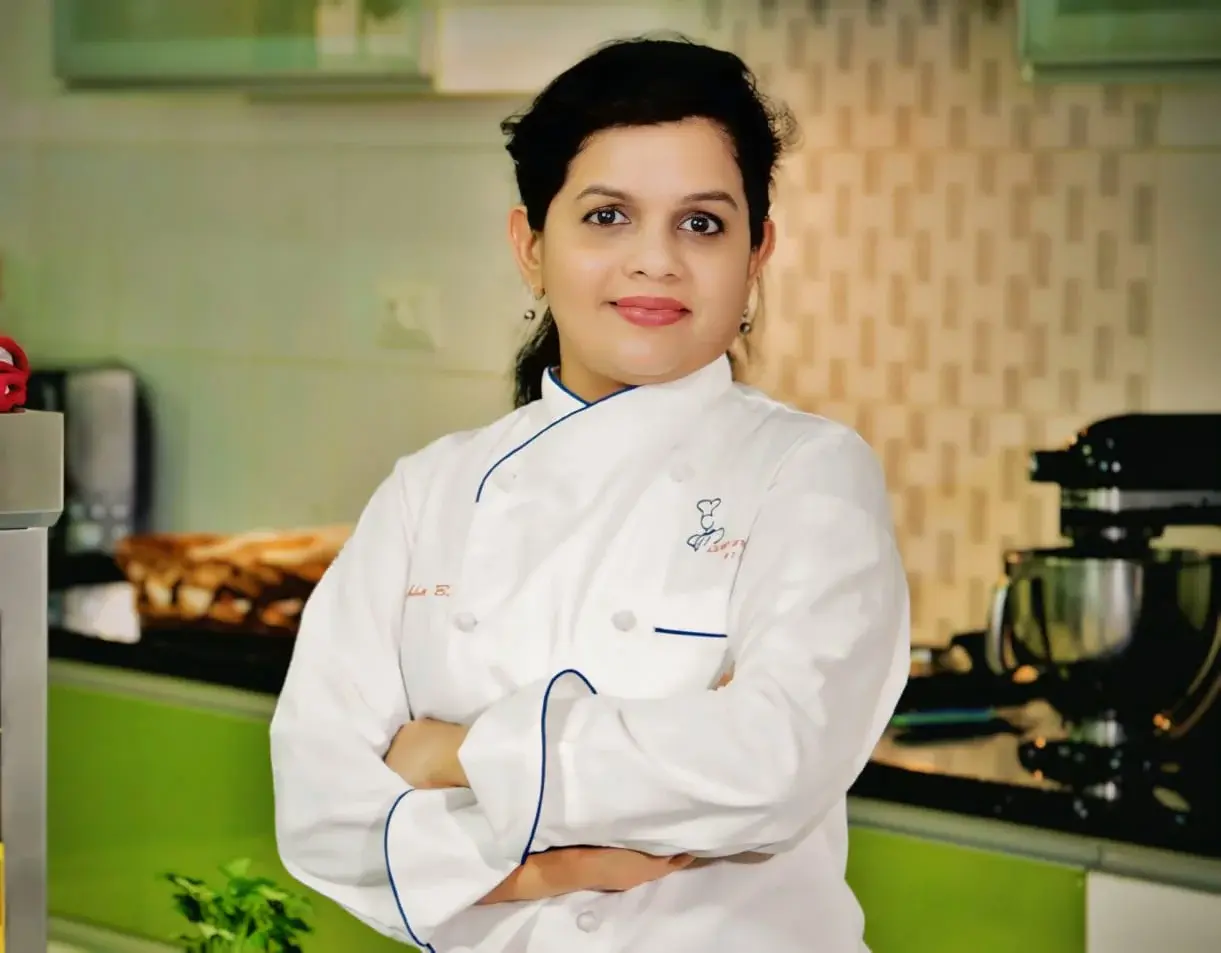
Shobha Bhat

Founder and Pastry Chef
Celesteyum Academy is the culmination of years of passionate baking and Shobha‘s dedication to teaching the best practices in the world of baking. Coming from a family deeply entrenched in the hospitality industry, her journey into the world of baking began a decade ago.