
Top 9 Skills You Will Learn in a Baking Class
Top 9 Skills You Will Learn in a Baking Class go far beyond simply following a recipe. Baking combines creativity with precision, ingredient knowledge, organisation, temperature control and consistent technique. For beginners, structured training helps develop basic baking skills and understand why different baking techniques affect the texture, structure, flavour and appearance of finished products.
This guide explains nine essential baking skills students can develop through hands-on training, from accurate measuring and mise en place to mixing methods, oven control, food safety and professional kitchen organisation. These fundamentals provide a stronger foundation for learners who want to improve their baking skills and progress towards more advanced bakery and pastry techniques.
1. Understanding Baking Ingredients and Their Roles
One of the most important baking skills for beginners is understanding how ingredients behave during mixing and baking. Flour, sugar, eggs, butter, fats and leavening agents each perform specific functions that influence structure, texture, flavour, moisture and volume.
Students learn how ingredient proportions interact and why changing one component can affect the final result. Developing this ingredient knowledge is a key part of baking fundamentals because it helps learners move beyond trial-and-error and make more informed adjustments to recipes.
2. Accurate Measuring and Precision in Baking
Precision is one of the core baking skills required for consistent results. Students learn how to measure ingredients accurately using appropriate weighing and measuring methods and understand why even small variations can affect texture, rise, moisture and overall product quality.
Accurate measuring also helps bakers reproduce successful recipes consistently across multiple batches. This discipline becomes increasingly important when moving from home baking to structured bakery and pastry production.
3. Mixing Methods and Baking Techniques
Different baked products require different baking techniques and mixing methods. Students learn techniques such as creaming, folding, whisking, kneading and gentle incorporation, along with when each method should be used.
Understanding how mixing affects gluten development, aeration, structure and texture helps learners achieve more consistent results rather than relying only on recipe instructions. These practical techniques form an important part of building strong foundational baking skills.
Learners who want to explore more foundational techniques can also browse Celesteyum Academy’s Baking Guides.
4. Dough and Batter Handling Skills
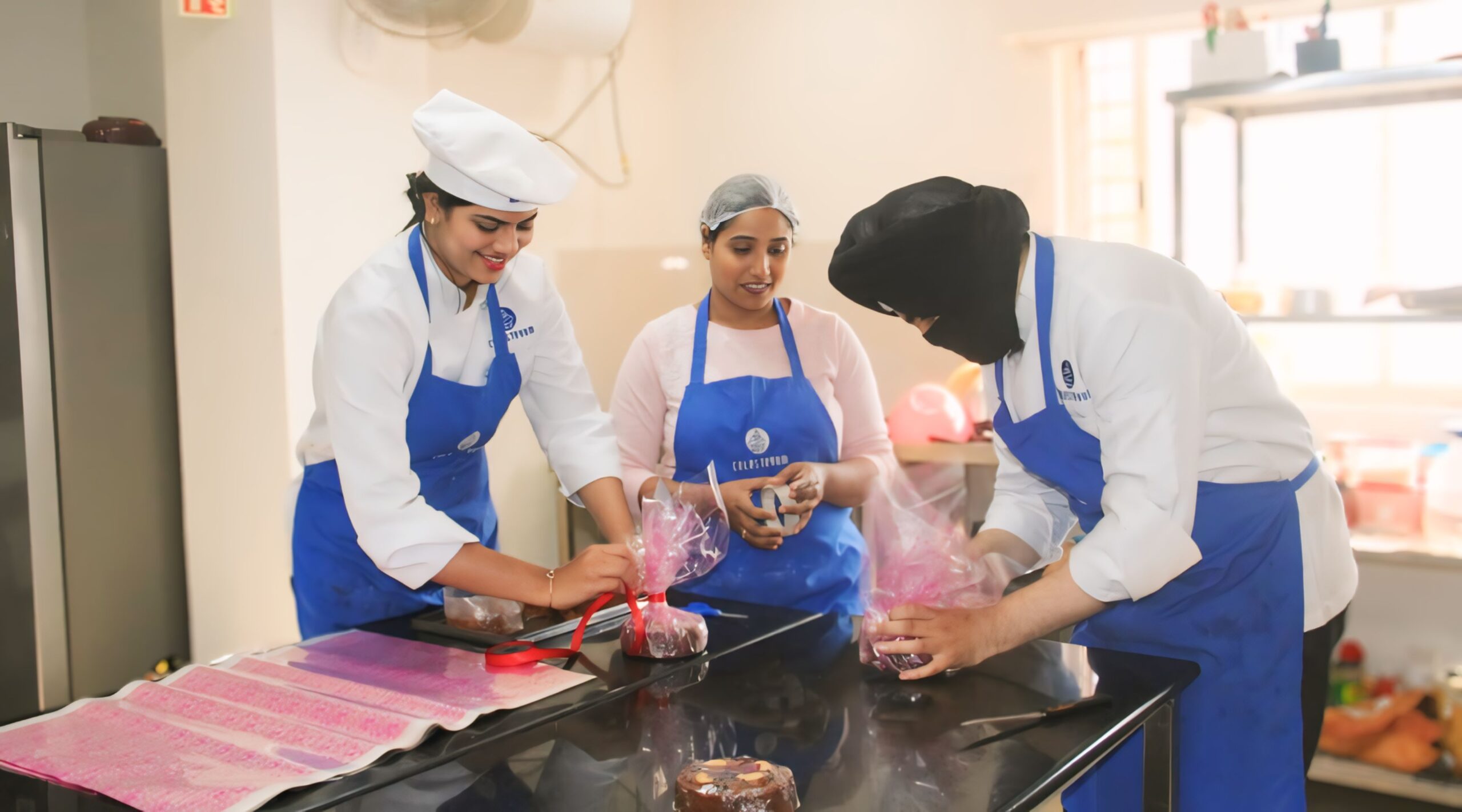
Correct dough and batter handling is one of the most practical baking skills students develop through training. Different products require different levels of mixing, kneading, folding and handling, and recognising the correct stage can significantly influence texture and structure.
Students learn how to:
- Knead dough to encourage appropriate gluten development.
- Fold batters carefully to retain incorporated air where required.
- Recognise visual and textural signs that indicate when a dough or batter has been mixed sufficiently.
- Adjust handling techniques according to the type of bread, cake or pastry being prepared.
These foundational techniques apply across breads, cakes and pastries. Learners who want to understand bread dough in greater depth can also explore Celesteyum Academy’s Bread Baking Fundamentals.
5. Baking and Oven Temperature Control
Understanding oven behaviour is another essential part of developing strong baking techniques. Temperature, baking time, rack position and oven characteristics can all influence rise, browning, moisture and the internal structure of a baked product.
Students learn about:
- Preheating the oven and maintaining the required baking temperature.
- Understanding how baking times vary between breads, cakes, cookies and pastries.
- Using appropriate oven rack positions for different products.
- Recognising signs of underbaking, overbaking and uneven heat distribution.
- Making practical adjustments for differences between ovens.
Learning to observe the product rather than relying only on a timer helps students develop better judgement and more consistent baking results.
6. Finishing, Decoration and Presentation Skills
Good baking is not only about flavour and texture. Finishing and presentation also influence how a baked product is perceived. Students are introduced to basic techniques that help create cleaner, more consistent and visually appealing results.
These bakery skills can include:
- Basic frosting and decorative finishing techniques.
- Clean slicing and consistent portioning.
- Simple garnishing and finishing details.
- Plating and visual presentation of finished baked products.
Developing presentation skills helps students think about consistency, portion size and the overall appearance of the final product. Using the right equipment also supports cleaner and more accurate work; Celesteyum’s guide to essential tools and equipment for a professional bakery explains some of the tools used in structured bakery production.

7. Time, Mise en Place and Workflow Management
Baking often involves several processes happening at different stages, so organisation and time management are important baking skills. Students learn how to plan their work before production begins and coordinate measuring, mixing, resting, proofing, baking, cooling and finishing more efficiently.
An important part of this is mise en place—preparing ingredients, equipment and the workstation before starting. Good mise en place helps reduce unnecessary delays, missed ingredients and mistakes during production.
Workflow management becomes especially important when students prepare several products at once, because each item may require different mixing, baking, cooling or resting times.
8. Baking Troubleshooting and Problem-Solving
Mistakes are part of learning, but developing the ability to identify why something went wrong is one of the most useful skills in baking. Structured training helps students connect baking results with ingredient ratios, mixing methods, temperature, timing and handling techniques.
Students may learn to investigate common problems such as:
- Dense or heavy cakes.
- Products that are overbaked or underbaked.
- Incorrect texture, moisture or rise.
- Uneven browning or inconsistent baking.
- Dough or batter that has been overmixed or undermixed.
Learning how to observe, diagnose and correct these problems helps students become less dependent on step-by-step recipes and develop greater confidence in their own baking judgement.
9. Consistency and Repeatability in Baking
The ability to reproduce the same quality repeatedly is one of the clearest signs of developed bakery skills. A successful result once may be accidental, but consistent results require accurate measuring, controlled processes, correct techniques and careful observation.
Through guided practice, students learn how to repeat recipes with greater control over texture, flavour, size, appearance and baking time across multiple batches. This consistency becomes especially important for learners who plan to move from casual baking towards professional bakery production or a baking business.
Why Structured Baking Classes Help Build Better Skills
Online recipes and tutorials can be useful, but structured training provides a more systematic way to develop basic baking skills. Students can learn techniques in sequence, practise them under guidance and receive feedback when a product does not turn out as expected.
Hands-on training also exposes learners to practical details that may not always be obvious from a written recipe, such as recognising the correct dough consistency, judging whether a batter has been mixed sufficiently, understanding oven behaviour and organising production efficiently.
Food safety and hygiene are also important professional kitchen skills. Learners can read Celesteyum Academy’s guide to food safety and hygiene in baking and refer to the Food Safety and Standards Authority of India (FSSAI) for official hygiene and sanitary guidance for food businesses.
How to Improve Your Baking Skills Beyond the Basics
Once students develop these foundational techniques, they can improve their baking skills by practising consistently, analysing mistakes and gradually working with more complex products and methods. Progress usually comes from understanding the principles behind a recipe rather than simply attempting more recipes.
At Celesteyum Academy, learners can begin with focused workshops and progress towards broader baking and pastry training. Beginners interested in bread techniques can explore Bread Baking Fundamentals, while learners interested in pastry techniques can explore the Breakfast French Pastries course.
Together, these nine skills create a practical baking skills list covering ingredient knowledge, precision, mixing, dough and batter handling, oven control, finishing, workflow management, troubleshooting and consistency. Building these skills gives learners a stronger foundation for both personal baking and further professional training.
Learners who want help choosing the right next step can contact Celesteyum Academy for information about available baking classes and programmes.
UPCOMING CLASSES
- Diploma in Professional Patisserie and Confectionery
October 5, 2026 - PIES AND TARTS
October 5, 2026 - Artisan Chocolates Class in Bangalore
October 7, 2026 - Cakes and Pastries Class in Bangalore
October 10, 2026 - Artisan Breads Workshop in Bangalore
October 12, 2026 - Cookies and Brownies Class in Bangalore
October 17, 2026 - Breakfast Pastries Course in Bangalore
October 24, 2026 - Bread Fundamentals Class in Bangalore
November 14, 2026 - Cakes and Pastries Class in Bangalore
November 21, 2026

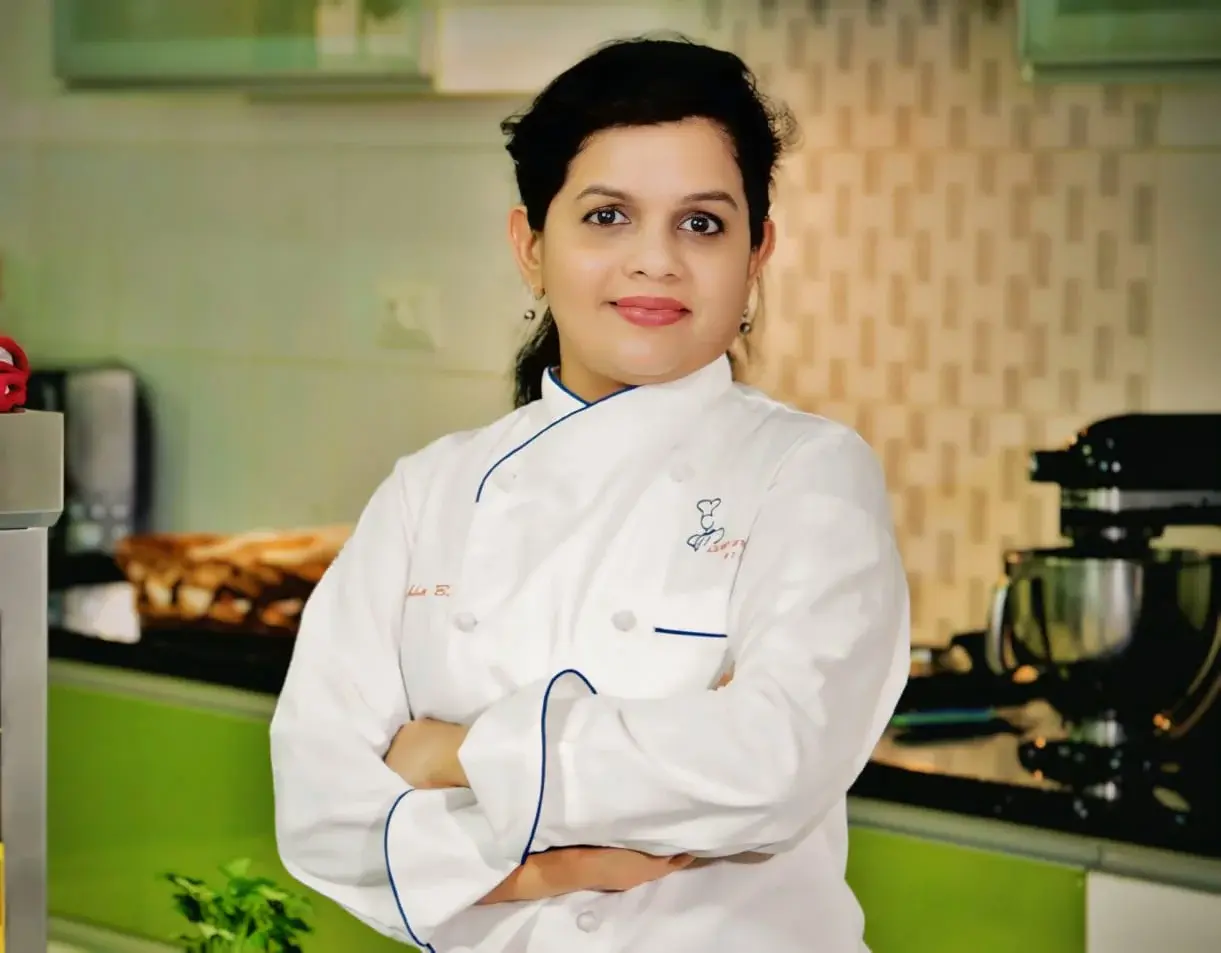
Shobha Bhat

Founder and Pastry Chef
Celesteyum Academy is the culmination of years of passionate baking and Shobha‘s dedication to teaching the best practices in the world of baking. Coming from a family deeply entrenched in the hospitality industry, her journey into the world of baking began a decade ago.