Baked Goods Shelf Life: Storage and Preservation Guide
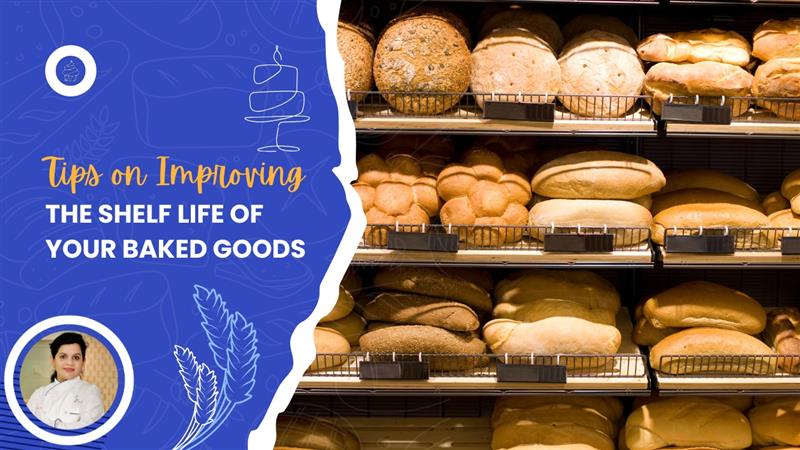
Freshly baked bread, soft cakes, buttery pastries and crispy cookies are best enjoyed when they retain their original flavour and texture. However, keeping baked goods fresh for longer can be challenging, particularly in warm and humid conditions.
Whether you are a home baker, an aspiring pastry chef or planning to start a bakery business, understanding the shelf life of baked goods helps you reduce food waste, maintain product quality and improve production planning.
Different bakery products have different storage requirements. A plain sponge cake, a cream-filled pastry, a chocolate brownie and a loaf of sourdough bread cannot all be stored in the same way.
This guide explains how long common baked goods last, how to store them correctly and how to extend the shelf life of bakery products naturally.
Most plain, non-perishable homemade baked goods retain their best quality for approximately one to seven days when stored correctly in a cool, dry place. Dry cookies and biscuits generally last longer than fresh bread and pastries. Products containing fresh cream, custard or cream cheese require refrigeration at 4°C or below.
Freezing suitable baked goods at -18°C or below can help maintain their quality for several months, depending on the product and packaging.
What Is the Shelf Life of Baked Goods?
The shelf life of baked goods is the period during which a bakery product remains suitable for consumption under specified storage conditions.
Shelf life depends on ingredients, moisture availability, preparation methods, packaging, hygiene and storage temperature.
Product Freshness
Freshness describes how well a baked product retains its original flavour, aroma, appearance and texture.
Food Safety
Food safety refers to whether a product remains safe to consume under appropriate handling and storage conditions.
A product may look and smell normal even when harmful microorganisms are present. Freshness alone is therefore not a reliable indicator of food safety.
Bakery Products Shelf Life Chart
The following chart provides practical household storage guidance for common bakery products.
| Bakery Product | Cool Room Temperature | Refrigerator | Freezer (Quality) |
|---|---|---|---|
| Plain bread | 2–3 days | May become stale faster | 1–3 months |
| Plain sponge cake | 2–3 days | Up to 7 days | 2–3 months |
| Fresh cream cake | Refrigeration required | Use promptly; typically 2–3 days for quality | Depends on the topping |
| Cheesecake | Refrigeration required | 3–4 days | Recipe dependent |
| Plain muffins | 1–2 days | Depends on ingredients | 2–3 months |
| Unfrosted cupcakes | 2–3 days | Usually unnecessary | 2–3 months |
| Plain brownies | 3–4 days | May help retain quality longer | 2–3 months |
| Plain cookies | 3–7 days | Usually unnecessary | 2–3 months |
| Plain croissants | Best on the day of baking | May affect texture | 1–2 months |
| Custard-filled pastries | Refrigeration required | Use promptly; preferably within 1–2 days for quality | Often unsuitable |
| Plain fruit pies | 1–2 days | 3–4 days | Recipe dependent |
| Pumpkin and pecan pies | Refrigeration required | 3–4 days | 1–2 months |
Storage guidance: These are approximate household storage and quality estimates for typical recipes, not validated commercial expiry dates. Product formulation, hygiene, packaging and temperature can significantly change storage requirements. Keep refrigerators at 4°C or below and freezers at -18°C or below.
For additional guidance, refer to the FoodSafety.gov cold food storage chart .
How Long Do Baked Goods Last at Room Temperature?
Plain cakes, bread, cookies, brownies and some muffins can generally be stored at room temperature for short periods when protected from heat, moisture and contamination.
However, room temperature storage is not suitable for every bakery product. Fresh cream desserts, cheesecakes, custard pastries and cakes with perishable fillings require refrigeration.
Best Practices for Room Temperature Storage
- Keep non-perishable baked goods in a cool, dry storage area.
- Avoid direct sunlight and heat from ovens.
- Allow plain baked products to cool before packaging.
- Use clean, food-grade containers.
- Keep crispy products separate from moist products.
- Check products regularly for signs of deterioration.
Important: Perishable bakery products should not remain at room temperature for more than two hours. When temperatures exceed 32°C, this limit reduces to one hour. Refrigerate these products promptly.
Read the FDA safe food handling guidelines for more information about refrigeration and safe storage.
What Affects the Shelf Life of Bakery Products?
Moisture Availability
Products with higher available moisture generally require greater care during storage. Dry biscuits and crackers usually have better keeping qualities than cream-filled pastries.
Ingredients and Fillings
Fresh cream, cream cheese, custard and certain fruit fillings can change the storage requirements of an otherwise non-perishable baked product.
Temperature and Humidity
Warm and humid conditions may accelerate mould growth and deterioration, making appropriate storage particularly important in India.
Product Packaging
Suitable packaging helps protect bakery products from contamination, moisture changes, air exposure and physical damage.
Preparation and Hygiene
Clean equipment, hygienic handling and proper preparation help reduce the risk of contamination before and after baking.
Recipe Formulation
The balance of flour, sugar, fats, liquids and other ingredients influences texture, moisture retention and the keeping quality of baked products.
How to Extend the Shelf Life of Bakery Products Naturally
Extending the shelf life of bakery products naturally involves selecting suitable ingredients, controlling moisture, maintaining hygiene and using appropriate packaging and storage methods.
Certain ingredients and baking techniques may also help retain moisture, improve texture or slow deterioration. Their effectiveness depends on the complete recipe.
1. Honey and Moisture Retention
Honey is commonly used in breads, cakes and muffins to improve flavour and moisture retention. In suitable formulations, it may help baked products remain soft for longer.
Adding honey alone, however, does not make a bakery product shelf-stable or guarantee protection against mould.
2. Sugar and Recipe Balance
Sugar influences the texture and moisture availability of many bakery products. Professional bakers carefully balance sugar with other ingredients to achieve the desired structure and keeping quality.
3. Cinnamon and Natural Ingredients
Cinnamon contains naturally occurring compounds with potential antimicrobial properties. However, the amount normally used for flavouring baked goods should not be relied upon as a proven preservation method.
4. Sourdough Fermentation
Sourdough fermentation produces organic acids and other compounds that may improve the keeping quality of certain breads. Some fermentation methods can also help delay bread staling or mould growth.
The result depends on the starter, fermentation process, recipe and storage conditions.
5. Pectin and Baking Enzymes
Pectin is a naturally occurring carbohydrate used to control texture in suitable bakery fillings and recipes. Baking enzymes, including certain amylases, may help reduce staling and maintain bread softness.
These ingredients perform specific technical functions. They should not be treated as general-purpose preservatives.
| Ingredient or Method | Potential Benefit | Common Application |
|---|---|---|
| Honey | Moisture retention | Bread, muffins and cakes |
| Sugar | Texture and moisture control | Cookies, cakes and fillings |
| Cinnamon | Flavour and potential antimicrobial activity | Sweet breads and spiced cakes |
| Pectin | Texture and consistency | Fruit fillings and selected recipes |
| Sourdough fermentation | May delay certain forms of deterioration | Artisan breads |
| Baking enzymes | Can help delay bread staling | Selected professional bread recipes |
Research into sourdough fermentation and bakery product quality demonstrates how fermentation and selected formulations can influence bread freshness and staling.
Natural ingredients do not replace food safety procedures, refrigeration or product-specific shelf-life assessment. Commercial food additives must be permitted for the intended product and used according to applicable food regulations.
6 Practical Ways to Keep Baked Goods Fresh Longer
Cool Products Properly
Allow non-perishable baked goods to cool on clean wire racks before packaging. Trapped steam can cause condensation and affect product texture. Refrigerate perishable products promptly.
Choose Suitable Containers
Use appropriate food-grade containers or wrapping to reduce unwanted moisture changes and protect products from contamination.
Control Storage Temperature
Store plain products in a cool, dry place where appropriate. Refrigerate products containing perishable ingredients at 4°C or below.
Freeze Suitable Products
Freeze plain bread, cakes, cookies and brownies in suitable packaging at -18°C or below to retain their quality for longer.
Maintain Bakery Hygiene
Clean preparation surfaces, equipment, cooling racks and packaging areas to reduce contamination during and after production.
Label and Rotate Stock
Record production and storage dates. Use older suitable stock before newer batches and always check the applicable expiry or use-by date.
Shelf Life of Cakes: Plain, Frosted and Filled Cakes
Cake shelf life depends on the type of cake, the frosting, filling, recipe formulation and storage conditions.
A plain sponge cake or tea cake generally maintains its freshness for two to three days in cool conditions when properly wrapped. Cakes containing cream, cheese or custard require refrigeration.
What Is the Shelf Life of Cake in the Fridge?
A properly wrapped plain cake may retain its quality for up to seven days in the refrigerator. However, refrigeration can change its texture and cause it to become firm or dry.
Cheesecakes and cakes containing cream cheese should generally be consumed within three to four days when refrigerated correctly.
Fresh cream and custard-filled cakes should be refrigerated promptly and consumed within the storage period appropriate to their recipe.
How to Increase the Shelf Life of Cakes
- Use a consistent recipe with accurate ingredient measurements.
- Avoid overbaking, which can cause unnecessary moisture loss.
- Allow plain cake layers to cool before wrapping.
- Protect cut surfaces with food-safe wrapping.
- Refrigerate cakes with perishable fillings.
- Freeze suitable cake layers for longer storage.
How to Store Cake Overnight Before Frosting
Allow plain cake layers to cool completely and wrap them securely. Store non-perishable cake layers in a cool place if they will be decorated the following day. Refrigerate any cake that contains perishable ingredients.
For more detailed guidance, refer to King Arthur Baking's cake storage guide .
Pastry Shelf Life and Storage Methods
The shelf life of pastries varies according to their dough, moisture content and fillings. Plain croissants, puff pastries and Danish pastries are usually at their best on the day they are baked.
How Long Do Pastries Last at Room Temperature?
Plain, non-perishable pastries generally retain their best texture for approximately one day at room temperature. Some may remain suitable for longer, although their crispness can decline.
Pastries containing cream, custard, cream cheese or meat should not be stored at room temperature for extended periods.
How Long Do Pastries Last in the Fridge?
The refrigerated shelf life of pastries depends mainly on their fillings and preparation. Custard-filled pastries are generally best consumed within one to two days for quality when stored correctly in the refrigerator.
How to Store Pastries in the Freezer
- Freeze suitable plain pastries after they have cooled.
- Wrap them individually to prevent moisture loss.
- Use freezer-safe containers or bags.
- Label each package with the freezing date.
- Reheat plain pastries when needed to help restore their crisp texture.
Custard, whipped cream and certain delicate fillings may separate or change texture after freezing.
Muffin Shelf Life: How to Keep Muffins Fresh
Plain homemade muffins generally retain their best quality for one to two days when stored in a suitable container at a cool room temperature.
Muffins containing moist fruit, fresh cream or other perishable ingredients may have different storage requirements.
How to Store Muffins After Baking
- Allow plain muffins to cool completely.
- Use a clean, suitable storage container.
- Place a clean paper towel inside the container if needed to absorb excess condensation.
- Refrigerate muffins containing perishable fillings or toppings.
- Freeze suitable plain muffins for longer storage.
Avoid packaging warm muffins immediately, as trapped steam can make their surfaces sticky or soggy.
Cupcake Shelf Life: Frosted and Unfrosted Cupcakes
Plain, unfrosted cupcakes generally stay fresh for two to three days when stored correctly in cool conditions.
The shelf life of frosted cupcakes depends on the type of frosting and filling. Fresh cream, cream cheese frosting and custard fillings require refrigeration.
How to Keep Cupcakes Fresh for Longer
- Allow cupcakes to cool before decorating or packaging.
- Use a container that protects the frosting without damaging it.
- Refrigerate cupcakes with perishable toppings.
- Freeze plain cupcakes before frosting when preparing them in advance.
- Thaw frozen cupcakes with perishable ingredients under refrigeration.
Baking cupcake bases ahead of time and decorating them closer to the serving date can help maintain presentation and product quality.
Brownies Shelf Life and Storage Tips
Plain homemade brownies generally retain their quality for three to four days when stored in an airtight container in a cool, dry place.
Brownies containing cheesecake layers, fresh dairy toppings or other perishable ingredients require appropriate refrigeration.
How to Make Brownies Last Longer
- Avoid overbaking to help retain the desired texture.
- Allow brownies to cool before slicing and packaging.
- Keep plain brownies in a sealed container.
- Protect exposed cut surfaces from drying out.
- Freeze individually wrapped portions for longer storage.
Freezing plain brownies in individual portions is a useful way to manage surplus production without repeatedly thawing the entire batch.
How to Increase the Shelf Life of Cookies
Cookies generally have a longer shelf life than many fresh bakery products because some varieties contain less available moisture.
Plain homemade cookies commonly retain their quality for three to seven days under suitable storage conditions. Drier varieties such as biscotti and shortbread may maintain their quality for longer.
Best Storage Tips for Cookies
- Allow cookies to cool completely before packaging.
- Store crispy and chewy cookies separately.
- Use suitable airtight containers or moisture-resistant pouches.
- Keep strong-flavoured cookies separate from delicate varieties.
- Avoid exposure to direct sunlight and humidity.
Home bakers selling cookies should evaluate the actual recipe and packaging combination before assigning a commercial shelf life or expiry date.
Shelf Life of Bread and Artisan Bread
Homemade bread generally retains its best quality for two to three days when stored in suitable packaging under cool, dry conditions.
Crusty artisan breads are often best enjoyed on the day of baking, while soft sandwich breads may benefit from packaging that limits moisture loss.
Does Refrigerating Bread Increase Its Shelf Life?
Refrigeration may slow mould growth, but it can also accelerate changes in bread starch that cause the crumb to become firm and stale.
Freezing is generally a better option when the aim is to maintain bread quality over longer periods.
How to Prevent Mould Growth in Bread
- Maintain hygienic preparation and cooling areas.
- Avoid packaging bread while it is still steaming.
- Protect bread from excessive humidity.
- Use suitable packaging for the type of bread.
- Freeze portions that will not be consumed soon.
Sourdough fermentation and specially formulated commercial bread ingredients may also improve the keeping quality of certain recipes.
Which Bakery Items Have a Long Shelf Life?
Dry, low-moisture bakery products generally offer better keeping qualities than moist cakes, fresh pastries and cream-based desserts.
Biscotti
Twice-baked biscuits with a dry texture that can retain their quality well when protected from moisture.
Shortbread
A butter-rich biscuit that can maintain its texture for longer under suitable dry storage conditions.
Dry Cookies
Low-moisture cookie varieties are often suitable for longer storage when packaged correctly.
Crackers
Their dry texture makes moisture-resistant packaging particularly important for quality retention.
Breadsticks and Rusks
Dry baked bread products that may maintain desirable texture for longer than fresh bread.
Certain Fruit Cakes
Some formulated fruit cakes have good keeping qualities, although storage requirements vary significantly between recipes.
For aspiring bakery entrepreneurs, products with suitable keeping qualities can support better stock planning, packaging, transportation and waste management.
However, a product should only be classified as shelf-stable when its formulation and storage conditions support that classification.
Best Packaging for Bakery Products
Packaging is an important part of bakery shelf-life management. The right packaging protects products while helping maintain their intended texture and appearance.
| Packaging Type | Suitable Products | Main Benefit |
|---|---|---|
| Airtight containers | Cookies, plain cakes and brownies | Reduces unwanted air and moisture exposure |
| Food-grade paper bags | Crusty bread for short-term storage | Helps retain crust texture |
| Resealable food-grade pouches | Biscuits and dry bakery products | Protects against moisture exposure |
| Cake boxes | Decorated cakes | Protects appearance during handling |
| Freezer-safe packaging | Bread, plain cakes and muffins | Reduces freezer burn and moisture loss |
| Insulated carriers with cold packs | Refrigerated bakery products | Supports temperature-controlled transport |
Bakery businesses should assess packaging according to the product's moisture characteristics, storage conditions, transportation requirements and intended shelf life.
Packaging alone does not make a perishable product safe at room temperature. Appropriate refrigeration must be maintained throughout storage and delivery.
How to Freeze and Thaw Baked Goods Correctly
Freezing is a practical method for preserving the quality of many bakery products and reducing waste.
How to Freeze Baked Goods
- Allow suitable non-perishable baked goods to cool.
- Divide larger products into convenient portions.
- Wrap each portion securely using food-safe materials.
- Place wrapped products in freezer-safe containers.
- Record the preparation and freezing dates.
- Maintain the freezer at -18°C or below.
How to Thaw Frozen Baked Goods
Plain bread, cookies and other non-perishable baked goods can generally be thawed according to product requirements. Cakes and pastries containing perishable ingredients should be thawed under refrigeration.
Plain bread and croissants can often be refreshed by reheating them briefly in an oven. Products with delicate frostings and fillings may require different handling.
Freezing does not restore spoiled food or remove all harmful microorganisms. Only freeze products that have been prepared and handled correctly.
Common Bakery Storage Mistakes to Avoid
- Packaging plain baked goods before they have cooled sufficiently.
- Keeping cream-filled cakes and pastries outside refrigeration for too long.
- Storing bakery products near ovens or direct sunlight.
- Using damaged or unsuitable packaging.
- Storing crisp and moist products together.
- Failing to record production and storage dates.
- Repeatedly thawing and refreezing products, which may reduce quality and create handling risks.
- Assuming honey, cinnamon or other natural ingredients will automatically prevent spoilage.
- Assigning the same expiry date to products with different formulations.
Correcting these common mistakes can improve bakery product consistency and reduce unnecessary waste.
How to Identify Spoiled Baked Goods
Common visible signs of spoilage in bakery products include:
- Visible mould growth.
- Unpleasant or unusual odours.
- Unexpected discolouration.
- Slimy or unusually sticky surfaces.
- Abnormal changes in texture.
If mould develops on bread or another porous baked product, discard the entire affected product rather than cutting away only the visible mould.
Do not taste food to check whether it has spoiled. Some harmful microorganisms cannot be detected through appearance, smell or taste.
Shelf Life Management for Home Bakery Businesses
Understanding bakery product shelf life is essential for anyone planning to sell cakes, cookies, bread, pastries or other baked products.
A successful bakery business needs consistent recipes, suitable packaging, hygienic production and reliable storage practices.
Standardise Recipes
Record ingredient quantities, preparation methods and baking conditions to maintain consistency between production batches.
Track Every Batch
Maintain records of production dates, storage conditions, ingredient batches and product movements.
Manage Production Planning
Prepare suitable quantities based on demand, product shelf life and available storage capacity.
Test Product Shelf Life
Assess the actual formulation, packaging and storage conditions before determining the product's commercial shelf life.
Provide Storage Instructions
Inform customers how products should be stored and consumed, especially when refrigeration is required.
Follow Food Safety Requirements
Maintain appropriate hygiene, registration, licensing and food labelling practices for the bakery business.
Commercial bakery shelf life should be established through appropriate product assessment, including microbiological testing where necessary. Household storage estimates should not be used directly as commercial expiry dates.
Bakery businesses in India should refer to the Food Safety and Standards Authority of India (FSSAI) for applicable food safety, licensing and labelling requirements.
If you are planning to turn your baking skills into a business, Celesteyum Academy's Entrepreneur Baking Course in Bangalore provides structured practical training alongside bakery business fundamentals.
Conclusion
Extending the shelf life of baked goods requires a combination of suitable ingredients, proper baking techniques, hygienic handling, effective packaging and appropriate storage temperatures.
Cakes, pastries, muffins, cupcakes, brownies, cookies and bread each have different storage requirements. Understanding these differences can help home bakers maintain product freshness and reduce unnecessary waste.
For professional bakers and aspiring bakery entrepreneurs, shelf-life management is also an important part of maintaining product consistency, planning production and delivering quality products to customers.
Through structured practical training at Celesteyum Academy in Whitefield, Bangalore, aspiring bakers can develop the technical skills and ingredient knowledge required to progress towards a professional baking career or bakery business.
References and Further Reading
Frequently Asked Questions
How can you extend the shelf life of bakery products naturally?
Bakery product shelf life can be improved through suitable ingredient selection, hygienic preparation, effective packaging, controlled storage and freezing. Honey, selected fermentation processes and certain baking ingredients may help maintain product quality when used in suitable formulations.
How long do baked goods last at room temperature?
Plain baked goods commonly retain their best quality for one to seven days, depending on the product and storage conditions. Bakery products containing perishable fillings or toppings require refrigeration and should not be left at room temperature for extended periods.
What is the shelf life of pastries?
Plain pastries are generally best enjoyed on the day of baking. Custard and cream-filled pastries require refrigeration, and their shelf life depends on the filling, preparation and storage conditions.
Which baked goods have a long shelf life?
Biscotti, crackers, shortbread, dry cookies, rusks and other low-moisture baked products generally have better keeping qualities than fresh bread, cream cakes and custard pastries.
What is the shelf life of a homemade cake?
A plain, unfrosted homemade cake typically retains its freshness for two to three days when properly wrapped and stored in cool conditions. Cakes with perishable fillings or frostings require refrigeration.
How long can cake last in the fridge?
A properly wrapped plain cake may retain its quality for up to seven days in the refrigerator. Cheesecakes and cakes containing cream cheese should generally be consumed within three to four days when refrigerated correctly. Storage requirements vary according to the most perishable ingredient.
How long do pastries last at room temperature?
Plain, non-perishable pastries are generally at their best for approximately one day at room temperature. Pastries containing cream, custard or other perishable fillings should be refrigerated promptly.
How can I increase the shelf life of cookies?
Allow cookies to cool completely before packaging, store them in suitable airtight containers and protect them from heat and humidity. Crispy and chewy cookies should be stored separately to help maintain their individual textures.
What is the shelf life of homemade muffins?
Plain homemade muffins generally retain their best quality for one to two days under cool, suitable storage conditions. Muffins with perishable toppings or fillings require refrigeration.
How long do cupcakes stay fresh?
Plain, unfrosted cupcakes generally remain fresh for two to three days when stored correctly. Frosted cupcake shelf life depends on the frosting and filling, particularly whether they require refrigeration.
What is the shelf life of brownies?
Plain homemade brownies generally retain their quality for three to four days in an airtight container under cool conditions. Freezing suitable brownies can help preserve their quality for several months.
What natural preservatives are used in baked goods?
Ingredients such as sugar and honey can influence moisture retention, while selected sourdough fermentation methods may improve the keeping quality of certain breads. Their effects depend on the recipe and processing conditions. They should not be considered guaranteed replacements for appropriate food safety practices.
Does carrot cake need to be refrigerated?
Carrot cake with cream cheese frosting or another perishable filling should be refrigerated. The storage requirements of plain carrot cake depend on its formulation, moisture characteristics and ingredients.
How do bakery businesses determine product shelf life?
Bakery businesses assess the product's formulation, available moisture, preparation process, packaging, storage conditions and microbiological safety to establish an appropriate commercial shelf life. Household storage estimates should not be used as validated commercial expiry dates.
UPCOMING CLASSES
- Artisan Chocolates Class in Bangalore
November 18, 2026 - Cakes and Pastries Class in Bangalore
November 21, 2026 - Pastry Special Class in Bangalore
November 23, 2026 - Breakfast Pastries Course in Bangalore
November 28, 2026 - International Breads
November 30, 2026 - Cookies and Brownies Class in Bangalore
December 5, 2026 - Classic French Pastries Class in Bangalore
December 7, 2026 - Sour Dough Breads Class in Bangalore
December 10, 2026


Shobha Bhat

Founder and Pastry Chef
Celesteyum Academy is the culmination of years of passionate baking and Shobha‘s dedication to teaching the best practices in the world of baking. Coming from a family deeply entrenched in the hospitality industry, her journey into the world of baking began a decade ago.
UPCOMING CLASSES
- Artisan Chocolates Class in Bangalore
November 18, 2026 - Cakes and Pastries Class in Bangalore
November 21, 2026 - Pastry Special Class in Bangalore
November 23, 2026 - Breakfast Pastries Course in Bangalore
November 28, 2026 - International Breads
November 30, 2026 - Cookies and Brownies Class in Bangalore
December 5, 2026 - Classic French Pastries Class in Bangalore
December 7, 2026 - Sour Dough Breads Class in Bangalore
December 10, 2026
Shobha Bhat
Founder and Pastry Chef
Celesteyum Academy is the culmination of years of passionate baking and Shobha‘s dedication to teaching the best practices in the world of baking. Coming from a family deeply entrenched in the hospitality industry, her journey into the world of baking began a decade ago.