
Food Safety Hygiene Baking for Professional Bakers
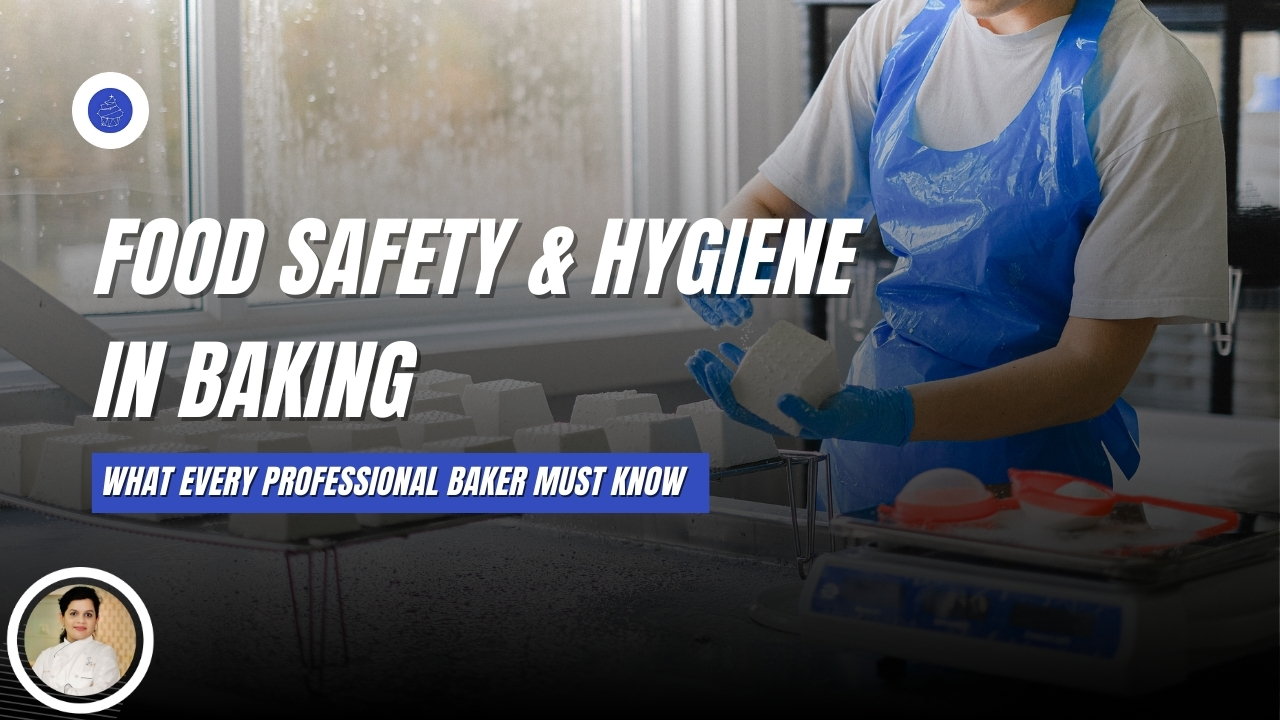
Food Safety Hygiene Baking for Professional Bakers is essential for maintaining product quality, protecting customers and operating a responsible bakery business. Good food safety and sanitation in baking includes personal hygiene, safe ingredient handling and storage, contamination prevention, clean equipment, effective sanitation and consistent food-handling practices throughout production.
For professional bakers in India, understanding bakery hygiene standards is an important part of working safely in a commercial kitchen. The Food Safety and Standards Authority of India (FSSAI) requires food businesses to follow applicable hygienic and sanitary practices, including Good Hygiene Practices (GHP) and Good Manufacturing Practices (GMP). This guide explains the practical food safety and hygiene principles professional bakers should understand and apply in bakery operations.
Food Safety as a Core Professional Responsibility
Professional baking involves ingredients such as dairy products, eggs, nuts, cereals containing gluten and other ingredients that require careful handling. Following good baking food safety practices helps reduce contamination risks, maintain consistent product quality and protect both customers and food businesses.
In India, the Food Safety and Standards Authority of India (FSSAI) requires applicable food businesses to follow hygienic and sanitary practices under Schedule 4 of the Food Safety and Standards (Licensing and Registration of Food Businesses) Regulations. These requirements incorporate Good Manufacturing Practices (GMP), Good Hygiene Practices (GHP) and food-safety management principles.
For bakers planning to operate their own commercial food business, understanding food safety should therefore form part of the wider operational knowledge required for entrepreneurship. Learners interested in the business side of baking can also explore Celesteyum Academy’s Entrepreneurship Course for Baking.
Bakery Hygiene and Sanitation Standards
Bakery hygiene standards cover the procedures used to keep ingredients, equipment, work surfaces, storage areas and food-handling environments clean and suitable for food production. Effective food safety and sanitation in baking should be applied throughout the production process rather than only during final cleaning.
Important bakery hygiene and sanitation practices include:
- Following scheduled cleaning and sanitisation procedures for work surfaces, utensils and bakery equipment.
- Separating raw materials, semi-processed products and finished bakery products where necessary to reduce contamination risks.
- Storing ingredients and perishable products under appropriate temperature and storage conditions.
- Maintaining personal hygiene, clean clothing and suitable protective equipment when handling food.
- Cleaning and sanitising equipment before and after food preparation where required.
- Maintaining hygienic storage areas for food, packaging materials and other bakery supplies.
- Using appropriate pest-control, waste-management and cleaning procedures within food-production areas.
These bakery food safety guidelines support safer production and are consistent with the hygienic and sanitary controls described within FSSAI’s food-safety framework.
Allergen Awareness and Labelling
Allergen awareness is particularly important in professional baking because commonly used ingredients can include wheat and other cereals containing gluten, milk, eggs, peanuts, tree nuts and soy.
Under India’s Food Safety and Standards (Labelling and Display) Regulations, specified allergens must be declared where the relevant labelling requirements apply. Bakery businesses should therefore develop procedures that help them:
- Identify allergenic ingredients used in recipes and finished products.
- Reduce unintended allergen cross-contact during preparation, storage and production.
- Maintain accurate ingredient and recipe information.
- Communicate allergen information clearly where required.
- Apply appropriate allergen declarations to packaged products where applicable.
Clear allergen management improves transparency and helps customers make more informed food choices.
Food Safety Training and Certification for Bakers
Formal food-safety training can help bakers understand hygiene, sanitation, personal cleanliness, safe food handling and regulatory responsibilities in greater depth.
FSSAI operates the Food Safety Training and Certification (FoSTaC) programme for food businesses and food handlers. FoSTaC training is based on hygienic and sanitary practices under Schedule 4, and its course structure includes bakery-specific food-safety training.
Food-safety certification should be distinguished from general baking education. Bakers looking for broader practical training in pastry, confectionery and professional kitchen skills can separately explore Celesteyum Academy’s Advanced Diploma in Professional Patisserie & Confectionery.
Pest Control in Bakery Operations
Pest management is an important part of maintaining bakery hygiene standards and a safe food-production environment. A structured bakery pest-control checklist can help professional bakeries identify risks early, protect stored ingredients and maintain cleaner preparation, storage and waste-handling areas.
Typical pest-control and hygiene measures include:
- Routine inspection of ingredient-storage, preparation and waste-disposal areas.
- Proper sealing and storage of ingredients, packaging materials and finished bakery products.
- Scheduled professional pest-control services where required.
- Maintaining clear records of pest-control, cleaning and hygiene procedures.
- Keeping waste containers and surrounding areas clean and properly managed.
Consistent pest management supports food safety and sanitation in baking by reducing contamination risks and helping maintain controlled bakery operations. FSSAI’s hygiene and sanitary requirements for food businesses also include pest-control, waste-management and sanitation measures as part of good food-handling practices.
How Structured Training Reinforces Bakery Food Safety
Food safety becomes more effective when hygiene and sanitation practices are built into everyday production routines rather than treated only as separate theory topics. In a professional training environment, students can develop practical habits related to workstation cleanliness, ingredient handling, equipment sanitation, contamination prevention and organised production.
At Celesteyum Academy, food-safety and hygiene principles are reinforced through practical training, helping students develop habits relevant to professional bakery and pastry operations.
If you would like to understand the available professional baking programmes or discuss the right training option, contact Celesteyum Academy for course information.

Frequently Asked Questions About Food Safety in Baking
What are the basic food safety rules for professional bakers?
Professional bakers should maintain good personal hygiene, keep work surfaces and equipment clean, store ingredients safely, prevent cross-contamination, manage allergens carefully and follow appropriate temperature, cleaning and sanitation procedures throughout bakery production.
What hygiene standards should a bakery follow?
Bakery hygiene standards should include regular cleaning and sanitisation of equipment and work areas, hygienic ingredient storage, personal cleanliness, pest control, waste management and procedures that help prevent contamination during preparation, baking, finishing and storage.
How can bakers prevent cross-contamination?
Bakers can reduce cross-contamination by separating raw materials from finished products where necessary, cleaning utensils and work surfaces between production stages, storing ingredients correctly, practising proper hand hygiene and keeping allergenic ingredients controlled during preparation.
How should allergens be managed in a professional bakery?
Professional bakeries should identify allergenic ingredients used in recipes, maintain accurate ingredient information, reduce unintended allergen cross-contact and communicate allergen information clearly. Packaged bakery products should also follow applicable allergen declaration requirements under Indian food-labelling regulations.
What are FSSAI hygiene requirements for bakeries?
Applicable food businesses in India are required to follow hygienic and sanitary practices under the Food Safety and Standards framework. These include areas such as personal hygiene, cleaning and sanitation, food handling, storage, pest control and waste management. Bakers can refer to the FSSAI hygiene requirements for official guidance.
Why is pest control important in bakery operations?
Pest control is an important part of bakery hygiene because pests can contaminate ingredients, packaging, storage areas and food-production environments. Routine inspection, proper food storage, waste management, cleaning and professional pest-control measures help reduce these risks.
UPCOMING CLASSES
- Entrepreneur Program for Bakers in Bangalore
September 7, 2026 - Breakfast Pastries Course in Bangalore
September 12, 2026 - Sour Dough Breads Class in Bangalore
September 12, 2026 - Breakfast Pastries Course in Bangalore
September 15, 2026 - Cakes and Pastries Class in Bangalore
September 19, 2026 - Bread Fundamentals Class in Bangalore
September 21, 2026 - Sour Dough Breads Class in Bangalore
September 24, 2026 - Cookies and Brownies Class in Bangalore
September 26, 2026 - Pastry Special Class in Bangalore
September 28, 2026


Shobha Bhat

Founder and Pastry Chef
Celesteyum Academy is the culmination of years of passionate baking and Shobha‘s dedication to teaching the best practices in the world of baking. Coming from a family deeply entrenched in the hospitality industry, her journey into the world of baking began a decade ago.